Catalogo Boardgames
Esplora la nostra collezione di giochi da tavolo
Tutti i Giochi
1176 giochi trovati
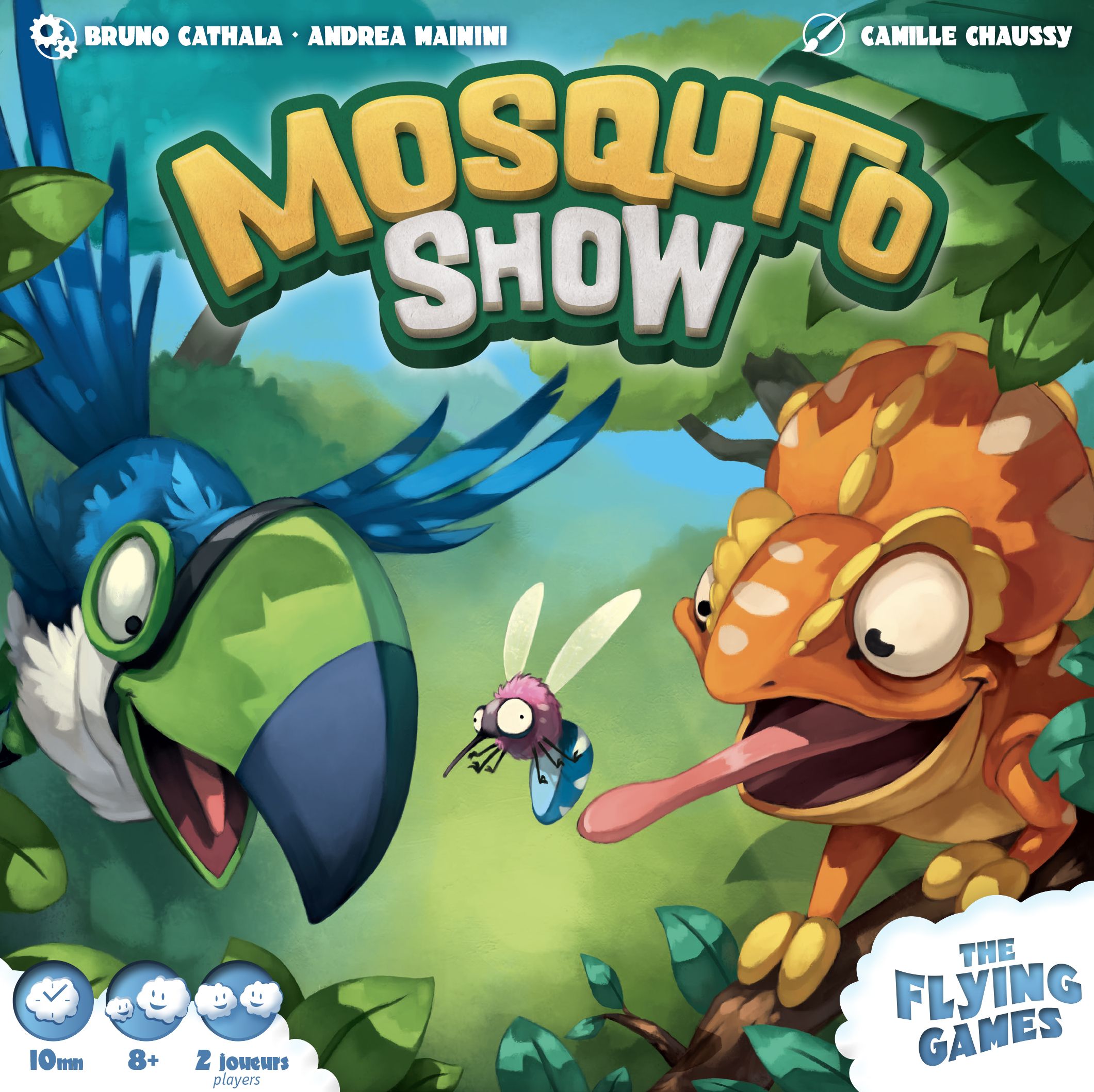
Mosquito Show
Mosquito Show is a tactical two-player game, with each player controlling a toucan and a chameleon. The game board is a 4x4 grid, with a stack of three mosquito tokens placed at the nine internal intersections of this grid. On a turn, a player moves either their toucan or chameleon. To move the chameleon, you first eat one of the mosquitoes sitting on a corner of its current space, then move it one square orthogonally. To move the toucan, you move it diagonally from one square to another, eating the top mosquito that you pass over; the toucan can move more than one space in a single movement, but you must be able to eat from each corner space that you cross. If you cannot feed one of your animals, then you can't move it. If you can't feed either of them, then you lose the game. If you eat nine yellow mosquitoes, you win the game instantly. The game also has mosquitoes of other colors that have special powers: move one mosquito, move one of your animals, force the opponent to play with a particular animal, etc.
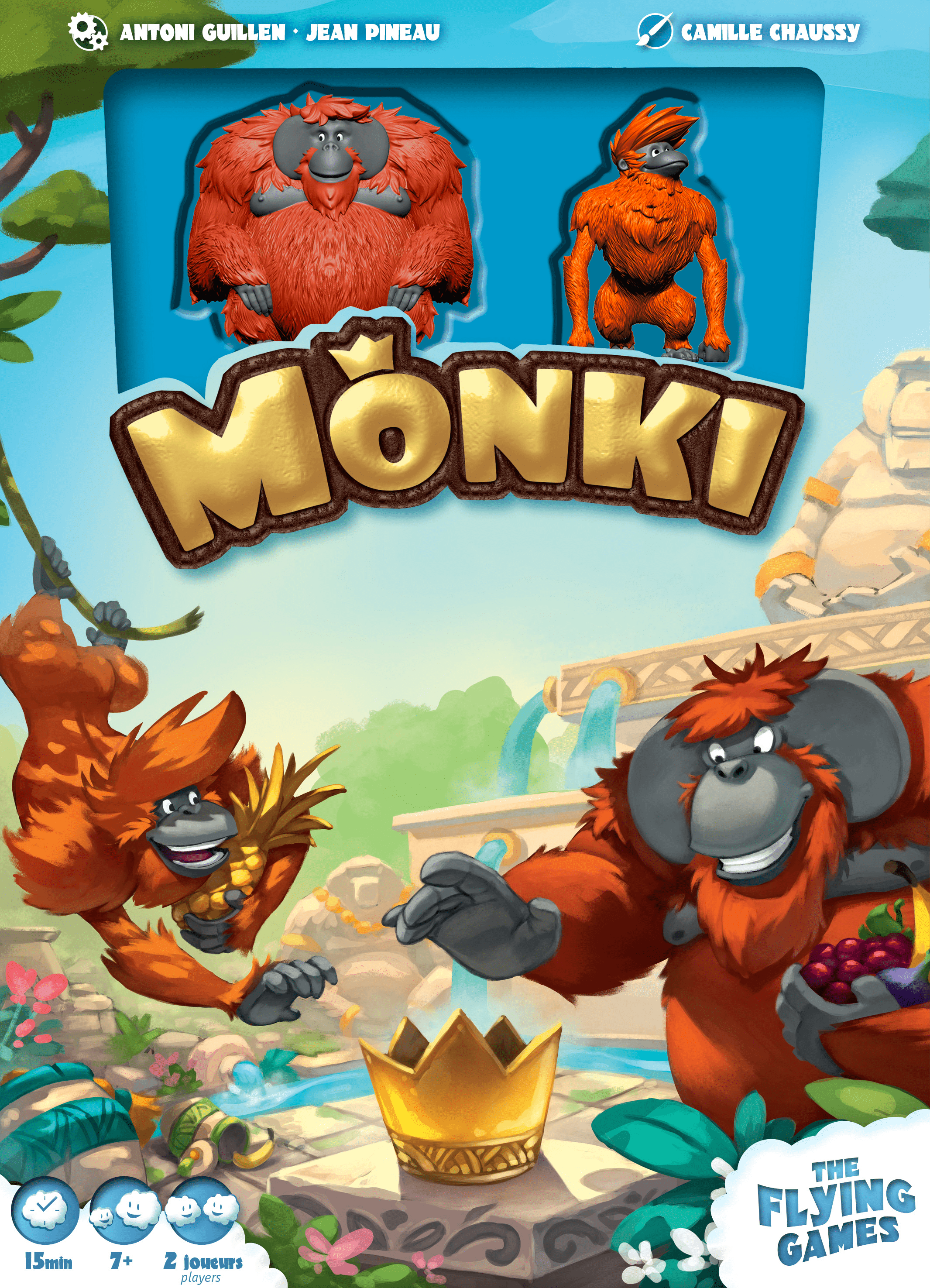
Monki
Deep in the heart of the jungle, the time for succession has come. Two orangutans from the Monki tribe compete to obtain the crown that will allow them to rule the rest of the tribe. Many jars are scattered in the middle of the ruins of an ageless temple, surrounded by old statues. They all contain the precious fruits coveted by our orangutans! The first Monki to collect all the fruits will be the next King of the Jungle! Monki is a two-player game in which you press your luck as far as you can to collect all the different types of fruits in the temple, particularly the golden fruits! During your turn, you move your Monki figurine in a straight line, then you can collect fruit tokens surrounding it until you stop or you reveal a duplicate (and you bust). The game ends when a player collects all eight regular fruits — or four golden fruits — thereby winning instantly.
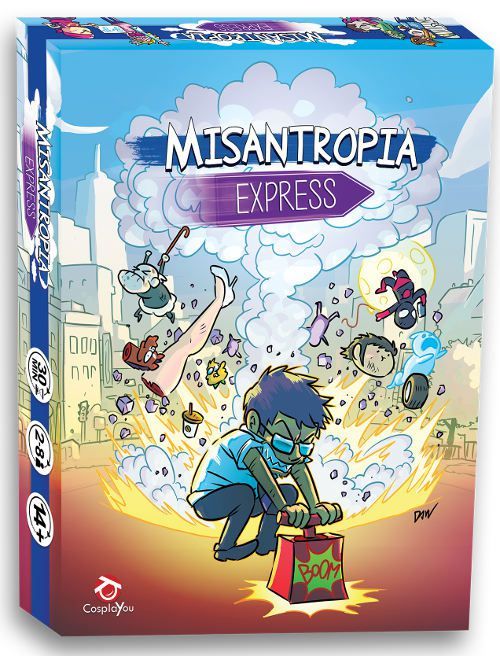
Misantropia Express
Be an unlucky middle-class worker! Live the complications of live, which will drop your Patience-points. Raise your hatred for humanity and develop Phobias which will oblige you to play standing, without talking, or who knows whatever! Meet with your colleagues in amusing places like the Construction site or the Unemployment center, and tell how you spend your hard-earned money in bu*****t! NEW VERSION! SIMPLER, FASTER, CONTAINS MORE HATE TOWARDS HUMANITY! —description from the publisher Interpreta uno sfigatissimo lavoratore medio! Vivi le difficoltà della vita, che ti faranno perdere punti Pazienza. Aumenta l'odio per l'umanità e sviluppa Fobie che ti obbligheranno a giocare in piedi, senza parlare o chissà cos'altro! Ritrovati con i tuoi colleghi in luoghi ameni come i Cantieri o il Centro per l'impiego, e racconta come spendi i tuoi sudati risparmi in pu******e! NUOVA VERSIONE! PIÙ SEMPLICE, PIÙ VELOCE, CONTIENE PIÙ ODIO VERSO L'UMANITÀ! —description from the publisher
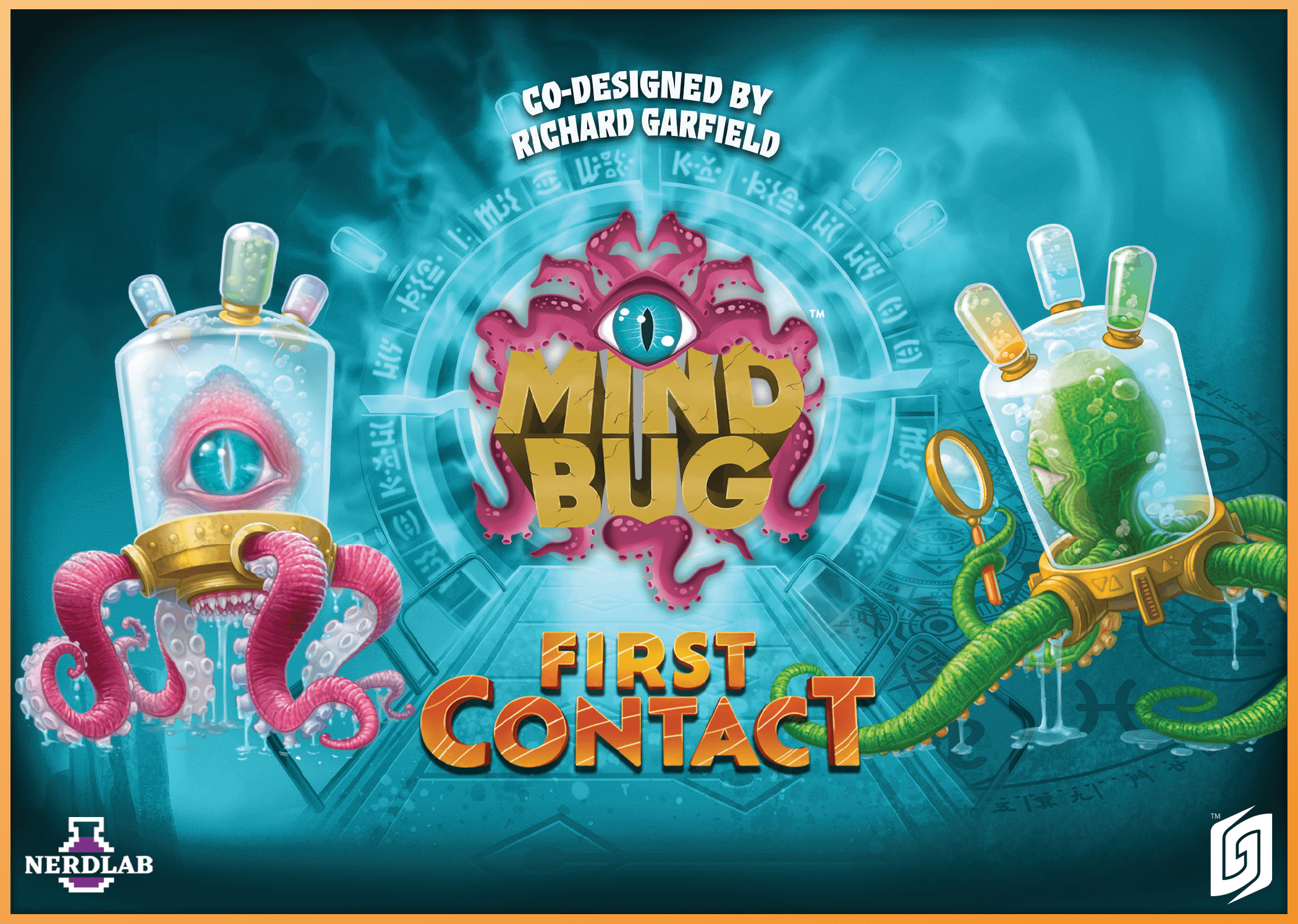
Mindbug: First Contact
In Mindbug, you summon hybrid creatures and send them to battle against your opponent — but when you summon a creature, the opponent may use one of their Mindbugs to take control of it. Outwit your opponent in a fascinating tactical duel in which having the best cards and playing them at the wrong time can be deadly for yourself. Cards in Mindbug represent weird creatures that all come with unique and powerful abilities such as a Compost Dragon, a Snail Hydra, or a Kangasaurus Rex. Each player starts the game with ten creature cards (five in hand and five in a draw pile) and tries to use them to reduce the opponent's life total to zero. In addition, every player receives two Mindbug cards that can be used to mind control an opposing creature when it is played. This innovative Mindbug mechanism is the core of the game and leads to a unique decision-making process that makes Mindbug feel utterly different from any other card game. Playing a card doesn't require any resources in Mindbug. As a result, the game has no ramp-up phase (such as gathering resources) and doesn't require weak cards. Since there is also no deck-building, you can start playing right away from a single deck. There is also no unfair advantage as players draw cards from the same deck and always get the chance to mind control the strongest opposing cards. In the end, it all comes down to your own decisions, making the game extremely fair and competitive at the same time. —description from the publisher
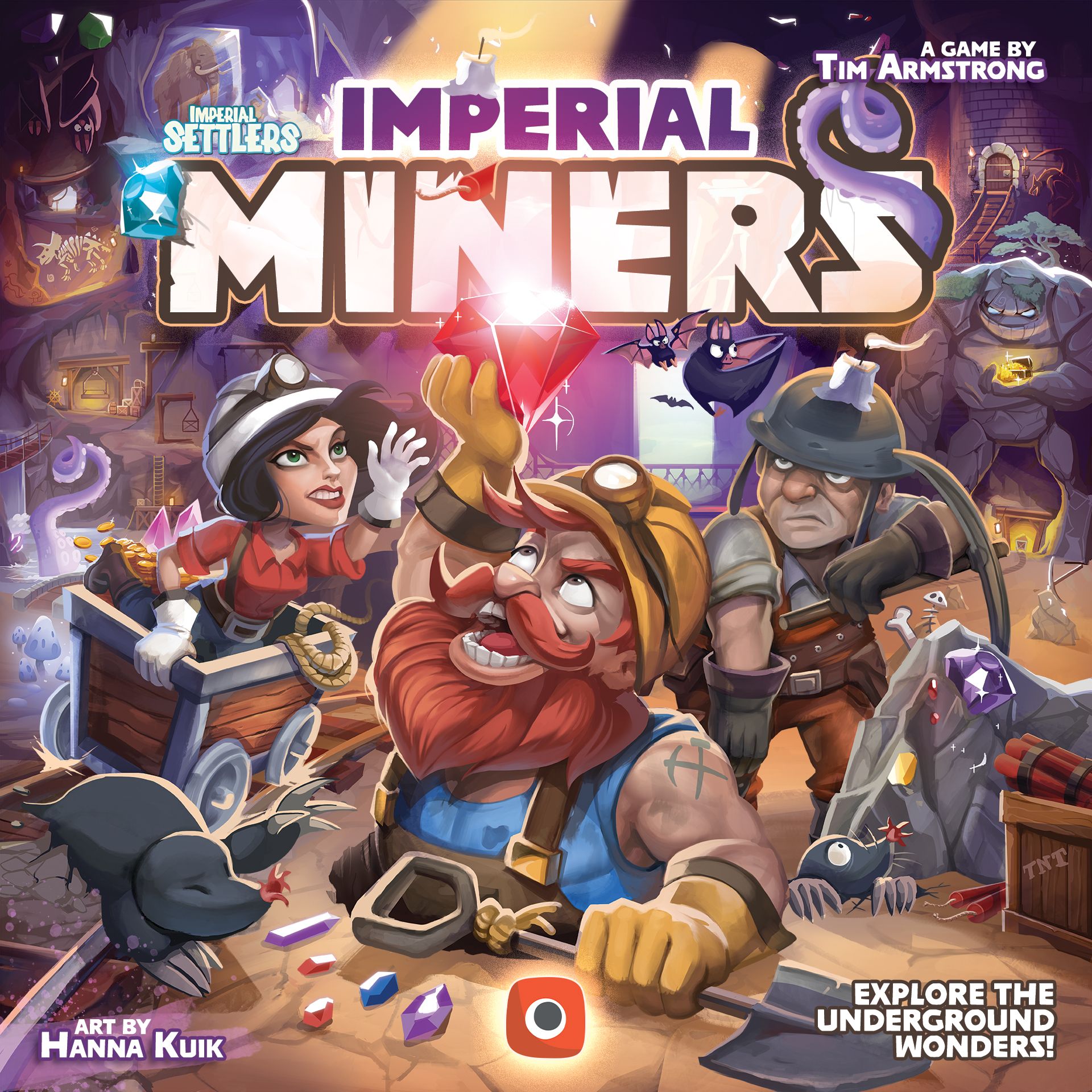
Minatori Imperiali
Imperial Miners is a light engine-building card game for 1 to 5 players from designer Tim Armstrong (Arcana Rising, Orbis), in which players excavate mines using a clever card activation system. This stand-alone game is set in the popular Imperial Settlers universe and offers beautiful illustrations, easy-to-grasp rules, and satisfying gameplay full of chain reactions and engine-building synergies. In Imperial Miners, players create their own mines by playing cards into their personal tableau. They start from the surface and develop downward. Each time a card is added to their mine, it activates itself and all the cards above it, rewarding a player with satisfying chain reactions and combos. The cards belong to six different factions and offer various strategies. Players mix different factions in their mines to achieve the best results. While developing their mines, players also advance on progress boards. During set-up, three out of the six available progress boards are randomly chosen for the game. These boards each offer a different strategic focus. Throughout the game, players advance to gain additional bonuses that help them develop their tableaus, activate the synergies between cards, gain victory points, and achieve even more satisfying combos. The combination of progress boards influences strategies and makes the game different each time you play. Imperial Miners offers impressive replayability thanks to its wide range of different cards and modular progress boards. Players also take turns simultaneously so gameplay is quick and lasts no longer than 45 minutes. The straightforward rules, beautiful artwork, and rewarding engine-building mechanisms make a perfect game for both casual and experienced gamers. —description from the publisher
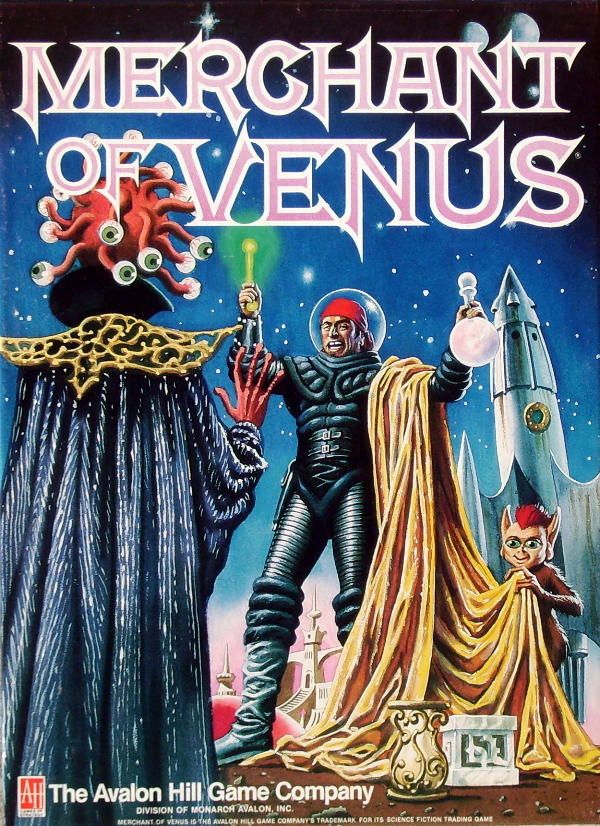
Merchant of Venus
Merchant of Venus makes players take on the roles of space traders chasing wealth and fortune. Each player moves their ship through interconnected systems on a fixed map, discovering new alien worlds to trade with. As players start to make money delivering commodities, their earnings can be used to purchase equipment and construct their own infrastructure. The player who first acquires enough total value in cash and port/factory deeds wins the game. The game uses a basic roll-and-move mechanism for movement, but modifies it with engine ship upgrades that let the players skip certain spaces during movement. When players reach cities and spaceports, they can buy and sell commodities. Different species are randomly distributed throughout the universe at the start of the game, and players will only uncover which species lives where through exploration in the course of the game - the layout of which species lives where works to offset the rigidity of the fixed map by making different routes through the map profitable each game. The prices a player receives for selling their cargo is determined by the species that lives in the system, and what commodities a port offers for purchase is determined by a unique and dynamic supply-and-demand mechanism. With their money, players can replace their spaceships with better models, or build factories (which create better commodities) and spaceports (which speed up trading). They can also buy upgrades for their ships (like shields, lasers, or engines). Variations included in the rulebook allow for interplayer combat and solo play, and the exact target wealth players have to acquire in order to win is decided on before each play.
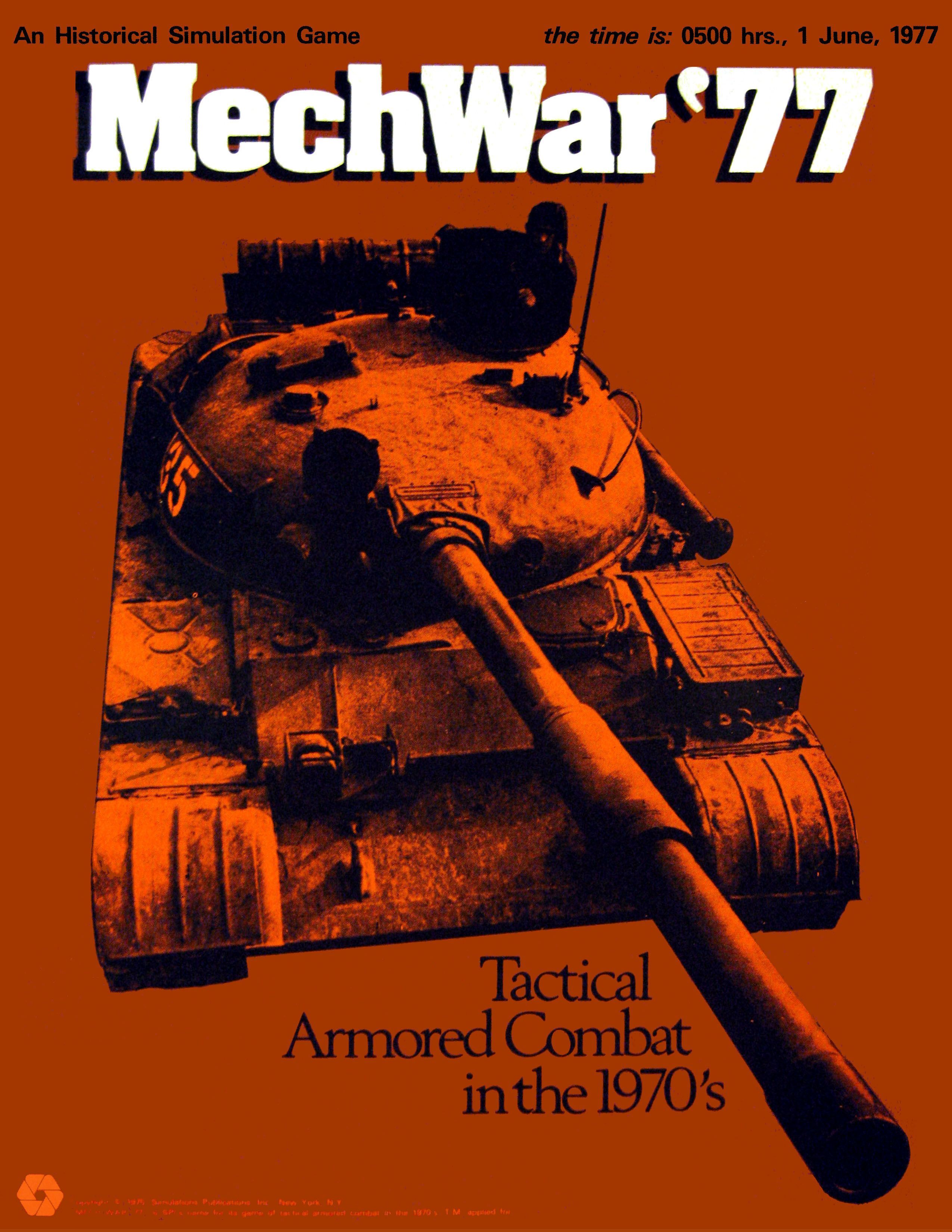
MechWar '77: Tactical Armored Combat in the 1970's
Mech War '77 is a simulation of tactical combat in West Germany and Asia during the 1970's. The game is played by scenario. Eight scenarios revolve around a hypothetical Soviet-American clash in West Germany. One scenario is drawn from the Yom Kippur War. The tenth scenario pictures a Sino-Soviet clash. Scale: Each hex represents 200 meters from side to side. Time: Each Game-Turn represent one to six minutes of elapsed time. Counters: 400 Uses the same rules system (but with additional "modern" elements) as Panzer '44: Tactical Armored Combat, Europe, 1944-45
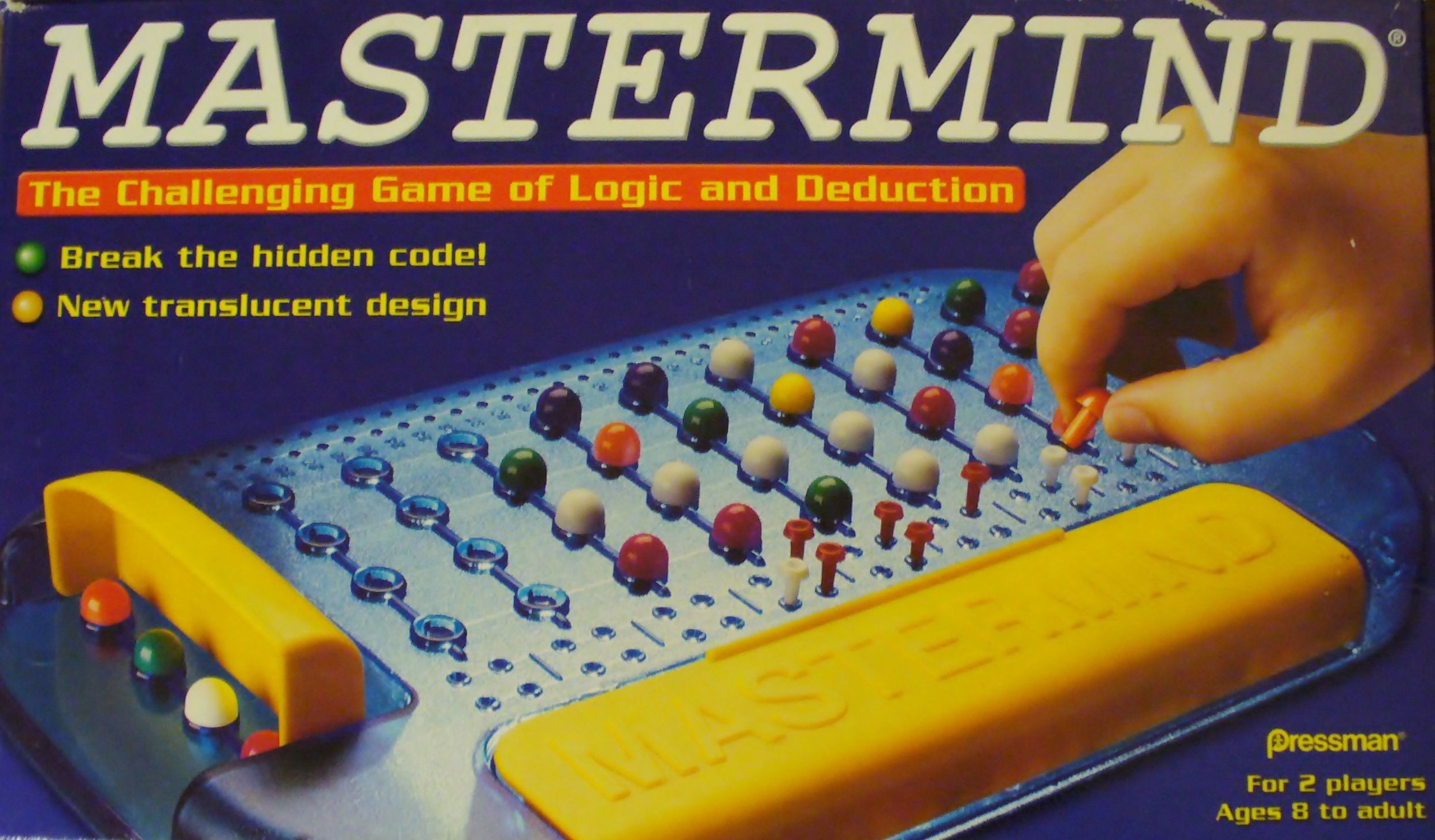
Mastermind
Test your code-cracking prowess with mastermind, the challenging game of logic and deduction. Can you crack the code in 10 moves or less? Can you create a code that can't be cracked? With more than 55 million units sold, Mastermind is a great strategy game, and one of the worlds most popular games ever. It’s easy to learn and fast to play, and with more than 2,000 possible codes, it’s different every time. The codemaker sets a secret code, and then the codebreaker tries to match the code using logic, deduction, and maybe even a little bit of luck. After each move, the codemaker gives clues to the codebreaker. Make the code even more devious by using multiple pegs of the same color or by leaving one or more peg holes empty. With so many possible code combinations, every game is guaranteed to be a brainteaser. For 2 players, ages 8 and up. Includes game console with built-in storage tray and code peg shield, 108 code pegs in 6 colors, 30 key pegs in two colors, and complete instructions. This is a two-player game with 4 holes. For other combinations, please see the Mastermind Family.

蝶旅花香 Mariposas
Every spring, millions of monarch butterflies leave Mexico to spread out across eastern North America. Every fall, millions fly back to Mexico. However, no single butterfly ever makes the round trip. Mariposas is a game of movement and set collection that lets players be part of this amazing journey. Mariposas is played in three seasons. In general, your butterflies try to head north in spring, spread out in summer, and return south in fall. The end of each season brings a scoring round, and at the end of fall, the player with the most successful family of butterflies — i.e., the most victory points — wins the game. —description from the publisher
Maracaibo
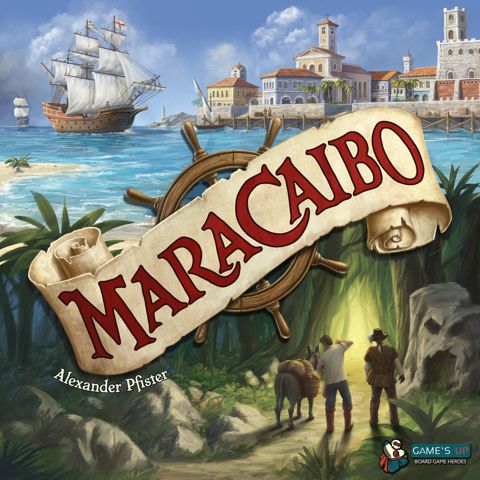
Maracaibo, a strategy game for 1-4 players by Alexander Pfister, is set in the Caribbean during the 17th century. The players try to increase their influence in three nations in four rounds with a play time of 40 minutes per player. The players sail on a round course through the Caribbean, e.g., you have city tiles where you are able to perform various actions or deliver goods to. One special feature is an implemented quest mode over more and various tiles, which tells the player, who chase after it, a little story. As a player, you move with your ship around the course, managing it by using cards like in other games from Alexander Pfister. NOTE: The Spanish and Portuguese editions of Maracaibo contain La Armada mini-expansion packaged inside the base game's box.
Magestorm
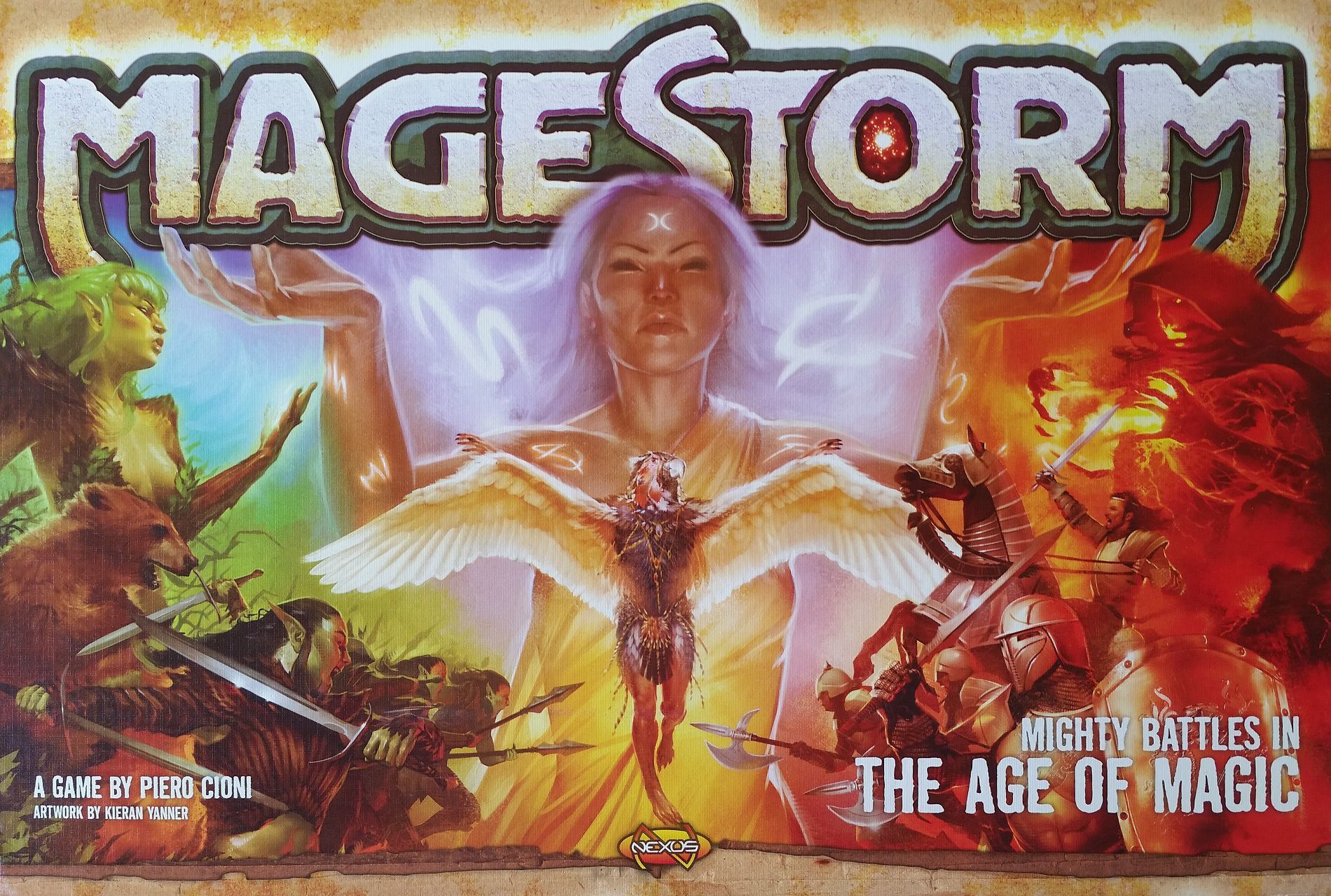
Enter a world of high magic and bloody melees with Magestorm! Powerful magicians wielding god-like powers call storms of fire from the sky, move hills, raze woods, and invoke fear into the hearts of hundreds of enemies. At the same time, mighty armies clash on the field of battle, and victory can only be achieved by the perfect combination of magic and military skill.
Mage Wars
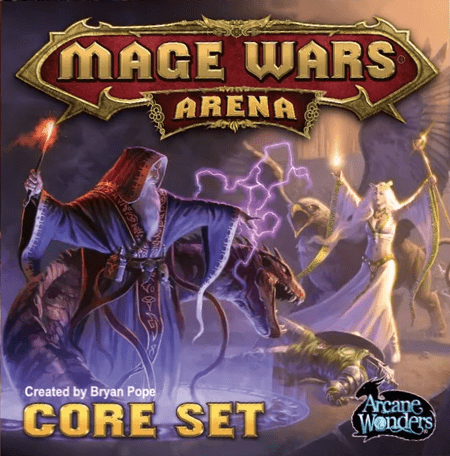
What would it be like for Mages of vastly different schools and philosophies of magic to come together in an arena and fight to the death? How would an Illusionist battle a Druid? Or a Warlock fight a Beastmaster? Or a Priestess fare against a Wizard? Mage Wars — redubbed Mage Wars Arena in 2015 to distinguish it from Mage Wars Academy — pits powerful Mages against each other in deadly arena combat. Each Mage uses his own fully-customizable book of spells to achieve total victory over his opponent. Summon mighty creatures to do battle in your name; cast powerful spells to attack your foe and thwart his every plan and strategy; use hidden enchantments to turn the tables and rule the day; adorn yourself with mighty weapons, armor, and arcane artifacts – all of this and more await you in the arena of Mage Wars! Mage Wars is a tactical board game, a combination of a card game and miniatures game, combining the best elements from each genre. The game is played on an arena game board divided into square areas called "zones", which regulate movement and the placement of objects. Each Mage (player) starts in a corner of the arena, opposite his enemy. Each player holds a spellbook, from which spell cards are pulled out as they are cast during the game. This has the feel of being a real Mage, turning the pages of your tome of magic, as you plan your strategy each turn. A point system allows you to choose spells for your spellbook, with more powerful spells and spells outside your schools of training costing more points. You have full access to cast any spell you want each turn, allowing for an unprecedented level of rich strategy and tactics. Many of these spells – such as creatures, equipment, and enchantments – are placed on the board and become objects in the game. Creatures can move around the arena, and attack each other and the enemy Mage. Attacks deal damage, as well as interesting special effects such as Burn, Corrode, Stun, Daze, Push, Cripple, Paralyze, etc. Creatures can be destroyed when they receive too much damage, or can be controlled by powerful curses and enchantments, or contained by walls and other creatures. Every Mage comes from a different school of magic, each with unique spells and strategies: The Beastmaster will try to rush and swarm the enemy with his hordes of animals, buffed by his nature enchantments. The Warlock will go right for the throat, armed with his powerful Lash of Hellfire, Helm of Fear, and Demonhide Armor. Along the way to the enemy Mage, he'll use his curses and fire attacks to contain and destroy enemy creatures. The Wizard is a trickster, a master of meta-magic: countering, stealing, redirecting, and destroying enemy spells and mana. He's also a master of teleportation and portals/gates. The Priestess will defend with knights and angels and powerful healing and protection spells. She'll wear down the enemy, then overwhelm them in the end. The base game comes with all you need to get started: spellbooks, extra spells to customize with the spellbooks, arena game board, dice, markers, etc. New Mages will be released every few months to add new spells, powers, and variety to the game. The game is NOT collectible, but is fully customizable! Extra copies of spells available with: Mage Wars: Core Spell Tome 1 Mage Wars: Core Spell Tome 2
Lost Seas
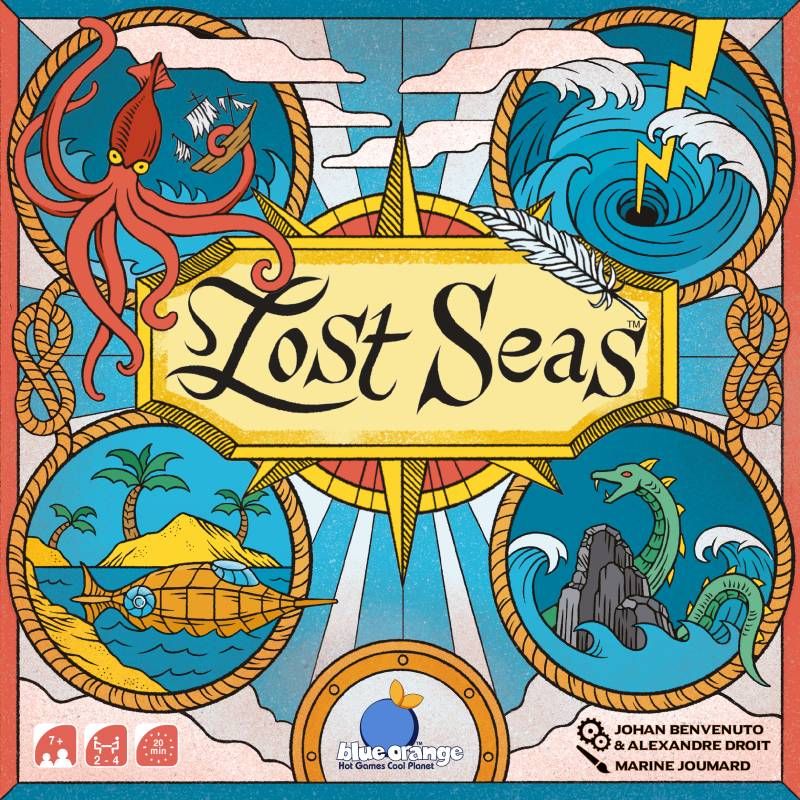
There is a host of terrible tales surrounding the mysterious uncharted depths of the Lost Seas. Rumours of giant krakens, infernal maelstroms, huge sea serpents and hostile deserted islands abound, and only skeletal shipwrecks remain as testament to tentative past expeditions. It is time to arm yourselves with the latest instruments of navigation and prepare to set sail on your most daring expedition yet, knowing that if you succeed, the glory will be beyond your wildest dreams and your map will become the stuff of legends. Forge your own legend by charting your exploits in the terrifying and hostile Lost Seas. Only the most perilous and daring journey will go down in history. Plan your Expedition Explore the dangerous depths of the Lost Seas Map your perilous journey —description from the publisher
Little Big Fish
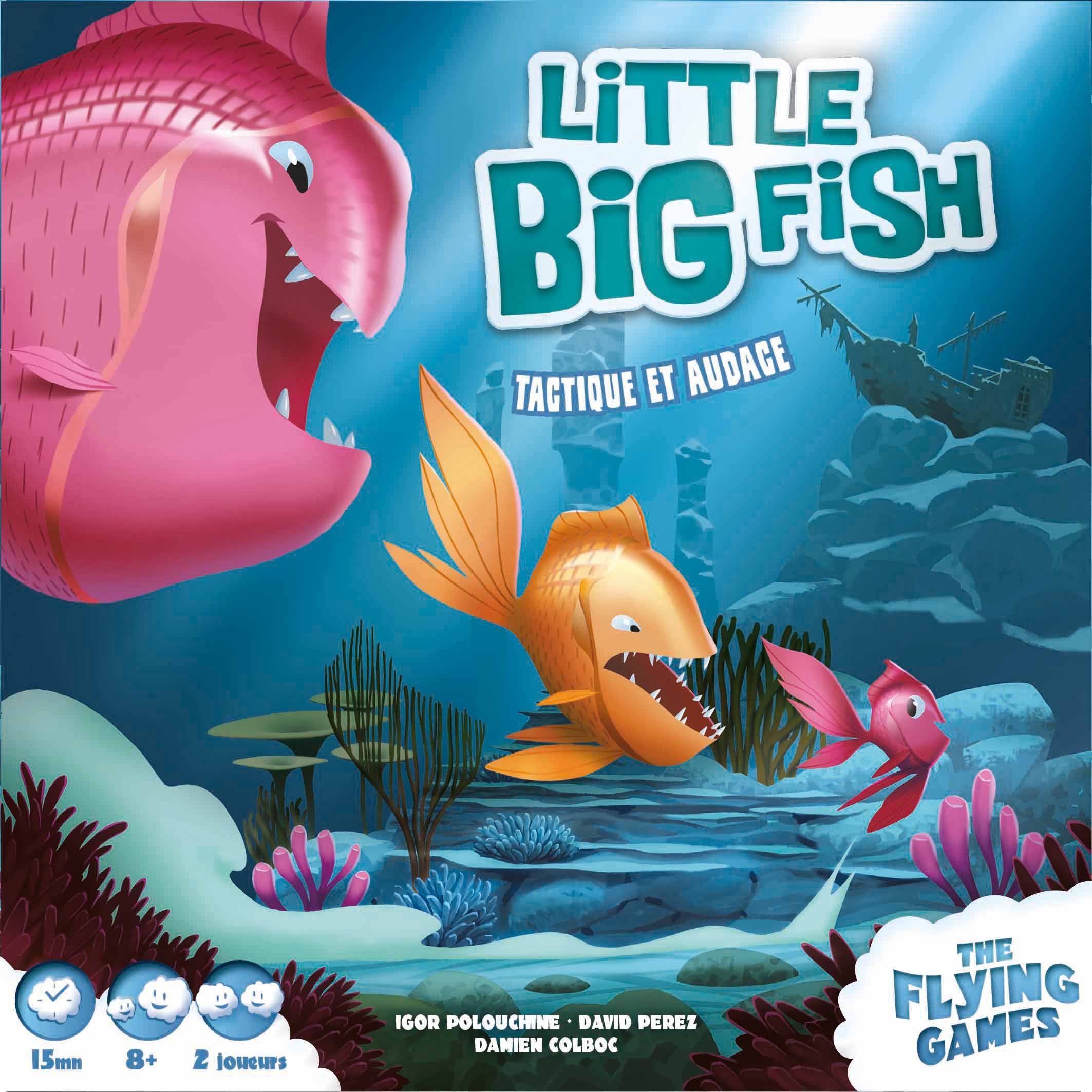
Little Big Fish is a tactical game for two players who compete to capture five fish first. To set up, each player has three little fish in the first line of an empty sea tile, with the board being comprised of four boards pushed together to form a square. To become bigger, fish must eat plankton. When you move to a space where there is a fish of the same size or smaller than you, you capture it. Small fish are fast but vulnerable; they can capture small fish but can be captured by any fish, and they are the only ones that can go through shipwrecks. Medium fish can capture small and medium fish, and they can't go through shipwrecks. Big fish can capture fish of any size, and they can't go through shipwrecks. On a turn, you move one of your fish two spaces or two of your fish one space each. Fish can move orthogonally, and you must resolve the action of a space before taking your second move. Move into a space with plankton, and your fish grows in size; land on a birth space, and you add a little fish from your reserve to the board. The shipwreck serves as a tunnel for small fish, and the "?" space makes you draw a tile, take its action, then discard it. You might rotate part of the board, put a fisherman to work, or have an unexpected birth. Race to eat five fish first!
Treasure Island
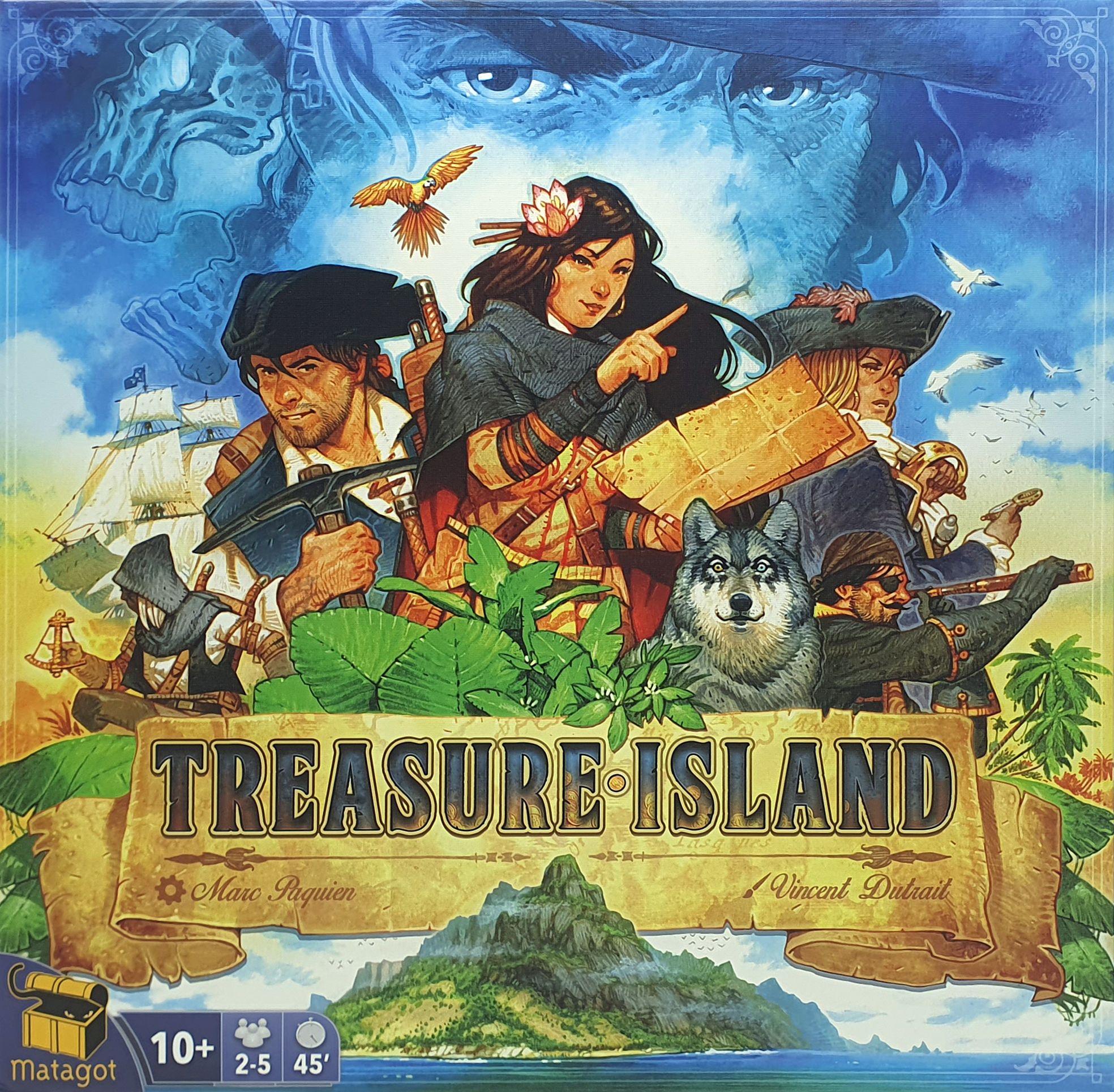
Long John Silver's crew has committed mutiny and has him cornered and tied up! Round after round, they question him about the location of his treasure and explore the island following his directions — or perhaps his misdirections? Who knows... The old sea dog is surely planning an escape, after all, after which he will definitely try to get his treasure back. Treasure Island is a game of bluffing and adventure in which one player embodies Long John, trying to mislead the others in their search for his treasure. The hunt reaches its climax with Long John's escape, when he will make a final run to get the booty for himself!
NMBR 9
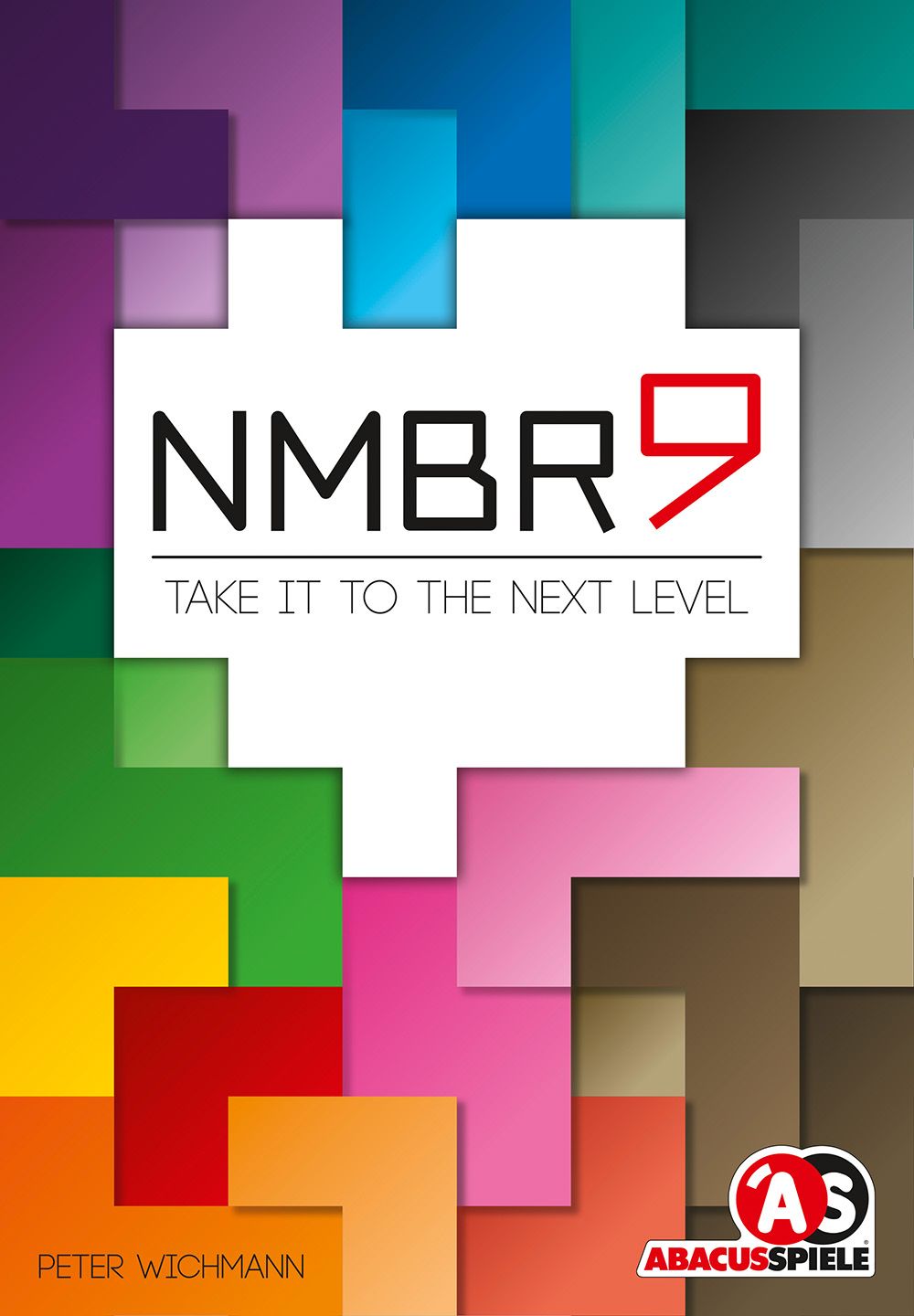
Numbers aren't worth anything in NMBR 9 unless they're off the ground floor and looking down from above. The game includes twenty cards numbered 0-9 twice and eighty tiles numbered 0-9; each number tile is composed of squares in some arrangement. After shuffling the deck of cards, draw and reveal the first card. Each player takes a number tile matching the card and places it on the table. With each new card drawn after that, each player takes the appropriate number tile, then adds it to the tiles that they already have in play, with each player building their own arrangement of tiles. The new tile must touch at least one other tile on the same level along one side of a square. A tile can also be placed on top of two or more other tiles as long as no part of the new tile overhangs the tiles below it; new tiles placed on this same level must touch at least one other tile, while also covering parts of at least two tiles and not overhanging. Once all the cards have been drawn and the tiles placed, players take turns calculating their score. A tile on the bottom level — the 0th level, if you will — scores 0 points; a tile on the 1st level above this is worth as many points as the number on the tile; a tile on the 2nd level is worth twice the number on the tile; etc. Whoever scores the most points wins!
Chronicles of Avel: New Adventures
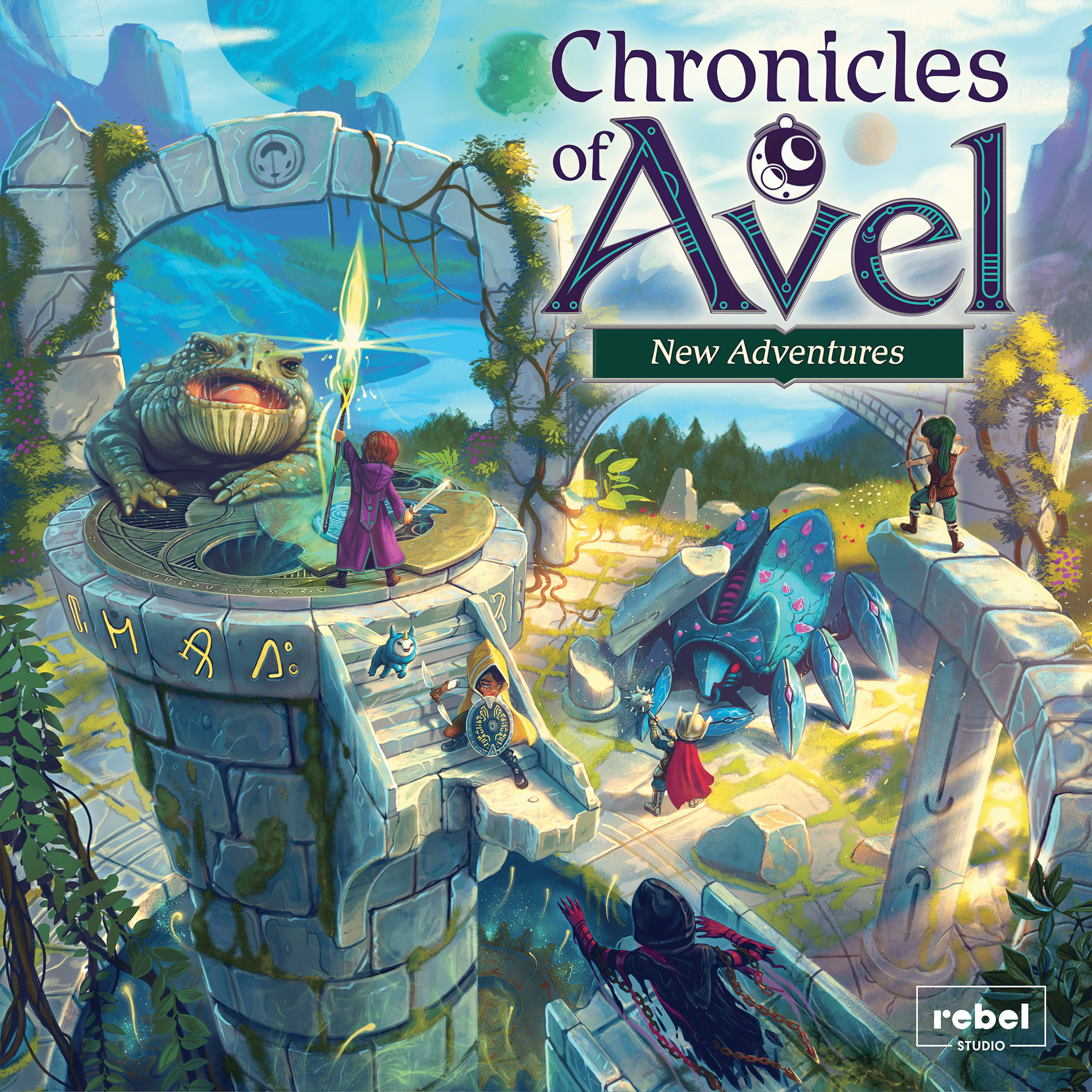
Chronicles of Avel: New Adventures is an exciting big expansion for Chronicles of Avel, in which players will once more become heroes and heroines with an epic quest to help the magical land of Avel. The game introduces 3 thematic scenarios which can be played separately or as a campaign and 3 modules that can be used in different combinations to create personalized challenges. Players will have to cooperate to choose the best strategy, support each other and win. In Chronicles of Avel: New Adventures players will continue exploring the world of Avel, using modular board created from hexagonal tiles. New place tiles, equipment, monsters and a new Beast will give opportunity to tell new stories in a much more immersive way. This expansion is an answer to requests made by players - containing all necessities to make Chronicles of Avel even better! —description from the publisher
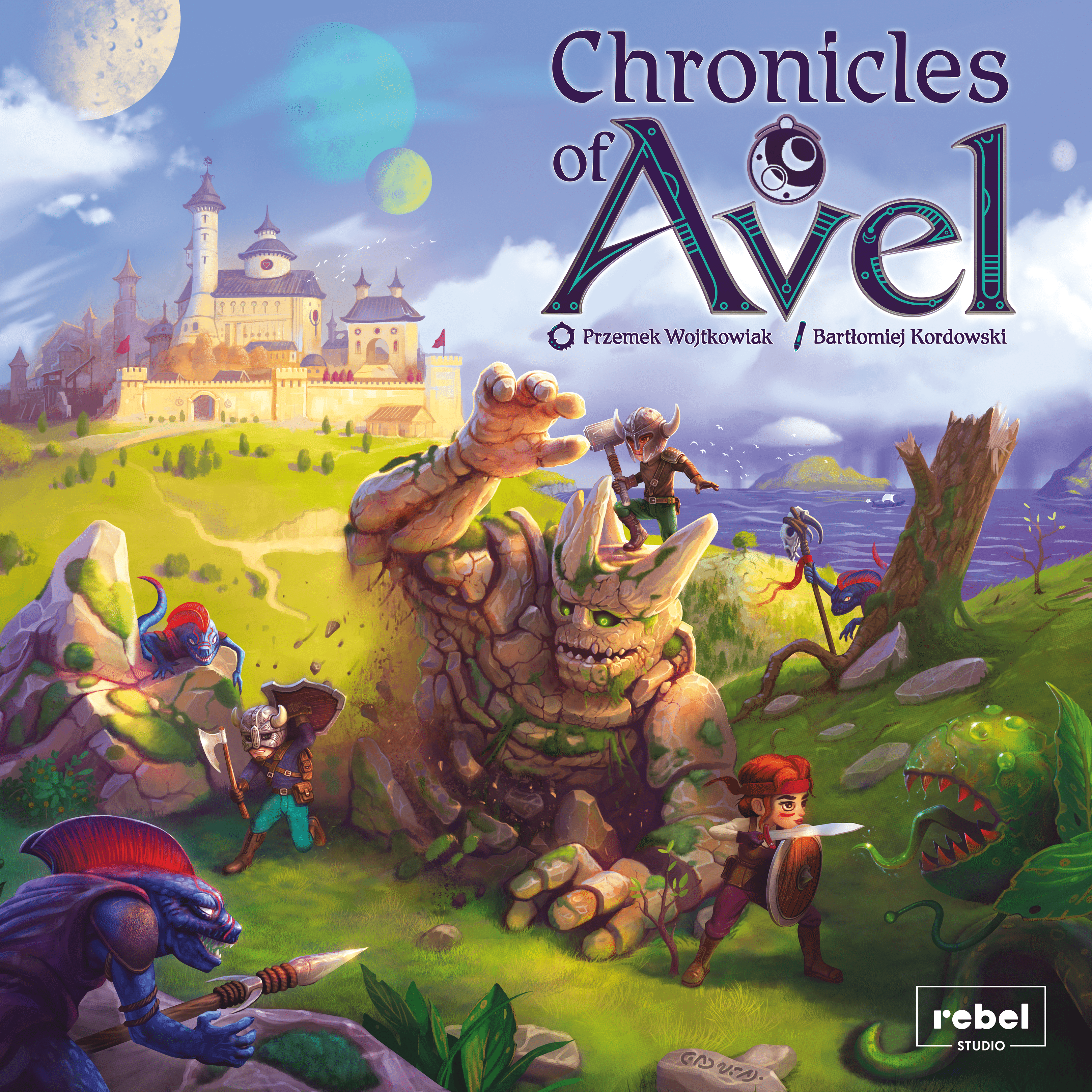
Chronicles of Avel
Chronicles of Avel is a cooperative board game for the whole family. Take the role of brave heroes and heroines with a mission to save your magical land. Create your character and give them a unique name. Get your equipment, upgrade it and prepare for battle. But remember to wisely choose what you carry as your backpack has limited space. Armed and ready, explore the land in search of adventure and fortune. Answer the Queen’s call and fight together against the servants of the Black Moon. Defend the castle, banish the Beast, and save Avel! In Chronicles of Avel players will be exploring the world of Avel, moving on a modular board created from hexagonal tiles (different every time). On their journey they will encounter dangerous monsters to fight and roll dice to determine success. Each victory leads to a prize - new weapon, armor, potions and gold - which will make heroes more powerful and unstoppable. But to earn equipment players will have to search through magical bag and choose using only their sense of touch. Victory awaits for those who will cooperate, prepare themselves and defeat the Beast and all his servants.
Puoi tenere Time For Boardgames sulla schermata Home senza scaricare niente.
In Safari tocca Condividi e poi Aggiungi a Home. La prima volta potrebbe chiederti di rientrare con il tuo account.
Un tocco e l'icona è sulla Home: nessuno store, nessuno spazio da liberare. Dal menu ⋮ di Chrome scegli Aggiungi a schermata Home.
Dal menu del browser scegli Aggiungi a schermata Home.