Catalogo Boardgames
Esplora la nostra collezione di giochi da tavolo
Tutti i Giochi
1176 giochi trovati
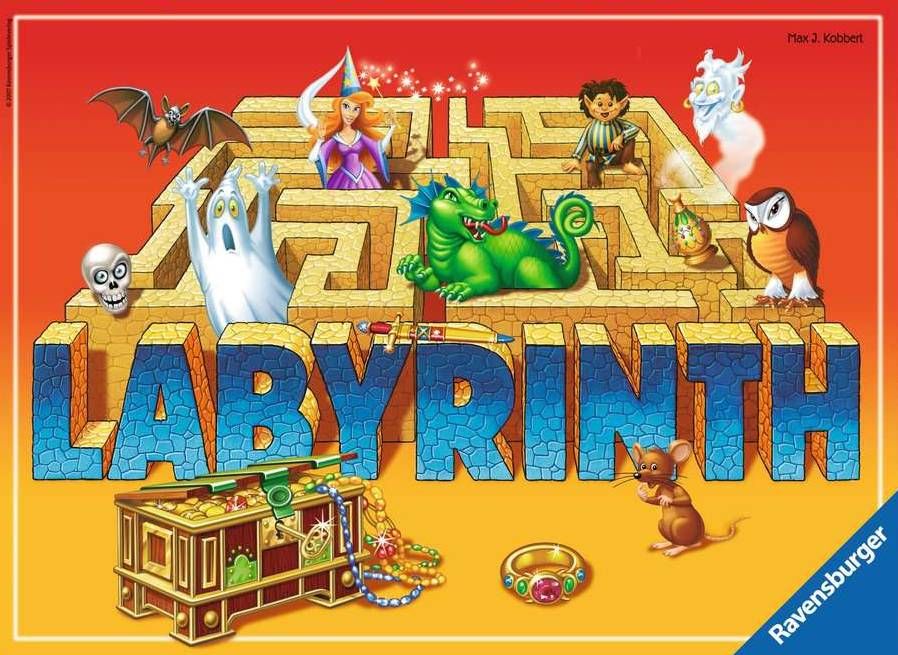
Labyrinth
Labyrinth (formerly The aMAZEing Labyrinth) has spawned a whole line of Labyrinth games. The game board has a set of tiles fixed solidly onto it; the remaining tiles that make up the labyrinth slide in and out of the rows created by the tiles that are locked in place. One tile always remains outside the labyrinth, and players take turns taking this extra tile and sliding it into a row of the labyrinth, moving all those tiles and pushing one out the other side of the board; this newly removed tile becomes the piece for the next player to add to the maze. Players move around the shifting paths of the labyrinth in a race to collect various treasures. Whoever collects all of his treasures first and returns to his home space wins! Labyrinth is simple at first glance and an excellent puzzle-solving game for children; it can also be played by adults using more strategy and more of a cutthroat approach.
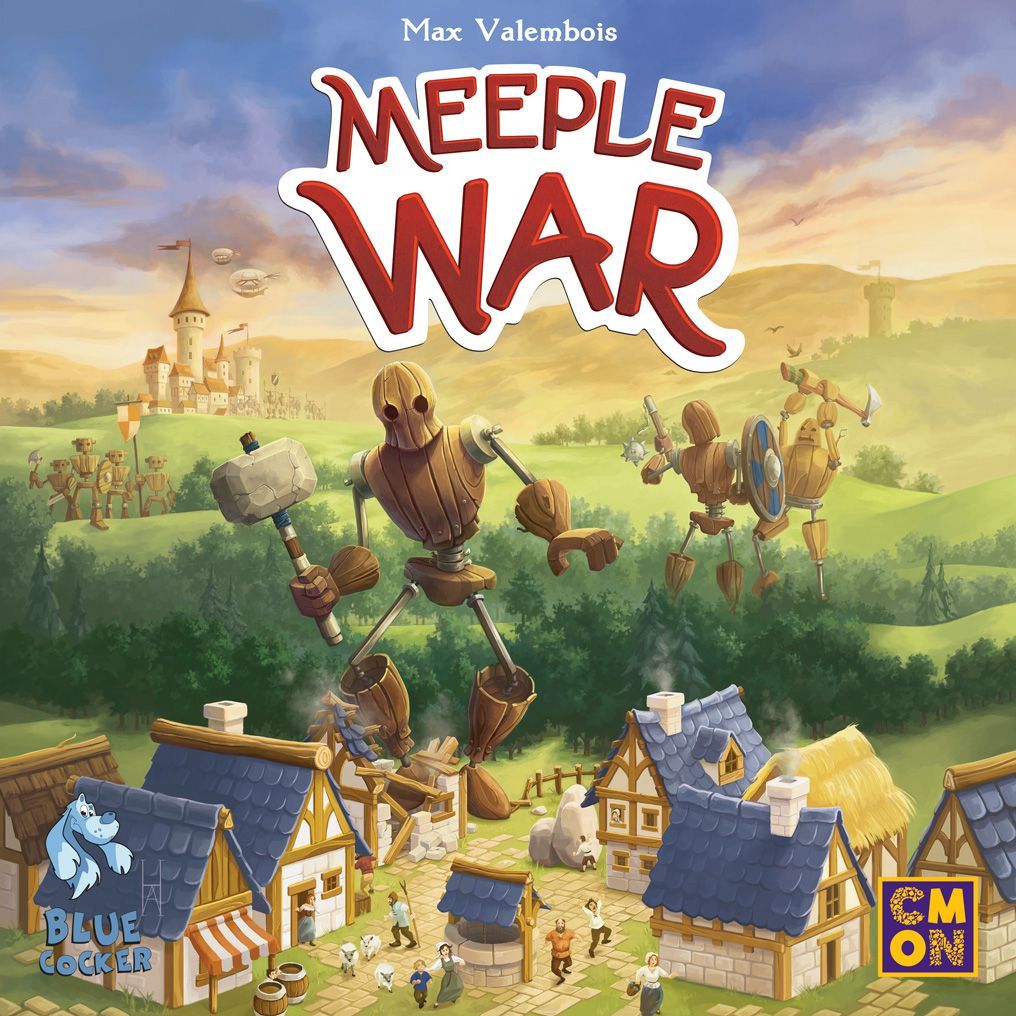
Meeple War
Before these elegant little wooden figures served faithfully in Carcassonne City and many other playful treasures, did you know that the meeples were originally battle vehicles for the four kingdoms of Lilliput? Embody yourself as one of the leaders of those kingdoms and re-enact (in actual size!) those tremendous battles of history. Develop your city, claim new territories, fight for glory, and destroy enemy cities: It’s time for meeple war! To win Meeple War, gain six victory points by fighting enemy armies, destroying enemy cities, and gaining control of areas. Over the course of the game, you develop your city, build powerful armies, fight and destroy buildings. In this game of timing and strategy, anticipation and diplomatic skill — or perhaps crying — is key to victory.
La Fuga di Velia
On 10 June 1924 Giacomo Matteotti was kidnapped and murdered in Rome by a fascist squad for having denounced electoral fraud before the advent of the dictatorship in Italy. When nothing was yet known about his killers, but there were strong suspicions about the instigators, his wife Velia met Mussolini at Palazzo Chigi to ask for the return of her husband's body. The Duce denies his involvement, but upon the widow's return to the large family villa in Fratta Polesine, the black cars of the secret police begin to tail the woman... In three chapters Velia will have to leave Fratta Polesine and get to Rovigo station to catch the train. La Fuga di Velia is a title produced by the State Archives of Rovigo on the occasion of the centenary of the death of Giacomo Matteotti, a socialist deputy from Rovigo who, with his own sacrifice, became the most courageous opponent of the fascist regime. An escape room, capable of revealing a fundamental chapter of Italian history through the resolution of elaborate puzzles, from the point of view of a victim of the dictatorship. —description from the publisher (translated) Il 10 Giugno 1924 Giacomo Matteotti fu rapito e assassinato a Roma da una squadra fascista per aver denunciato i brogli elettorali prima dell’avvento della dittatura in Italia. Quando ancora nulla si sapeva sui suoi assassini, ma forti erano i sospetti sui mandanti, la moglie Velia incontra Mussolini a Palazzo Chigi per chiedere la restituzione della salma del marito. Il Duce nega il suo coinvolgimento, ma al ritorno della vedova nella grande villa di famiglia a Fratta Polesine le auto nere della polizia segreta iniziano a pedinare la donna… In tre capitoli Velia dovrà uscire da Fratta Polesine ed arrivare alla stazione di Rovigo per prendere il treno. La Fuga di Velia è un titolo prodotto dall’Archivio di Stato di Rovigo in occasione del centenario della morte di Giacomo Matteotti, deputato socialista rodigino che divenne con il proprio sacrificio il più coraggioso oppositore del regime fascista. Un’escape room da tavolo unica nel suo genere, in grado di svelare attraverso la risoluzione di elaborati enigmi un capitolo fondamentale della Storia italiana, dal punto di vista di una vittima della dittatura. —description from the publisher
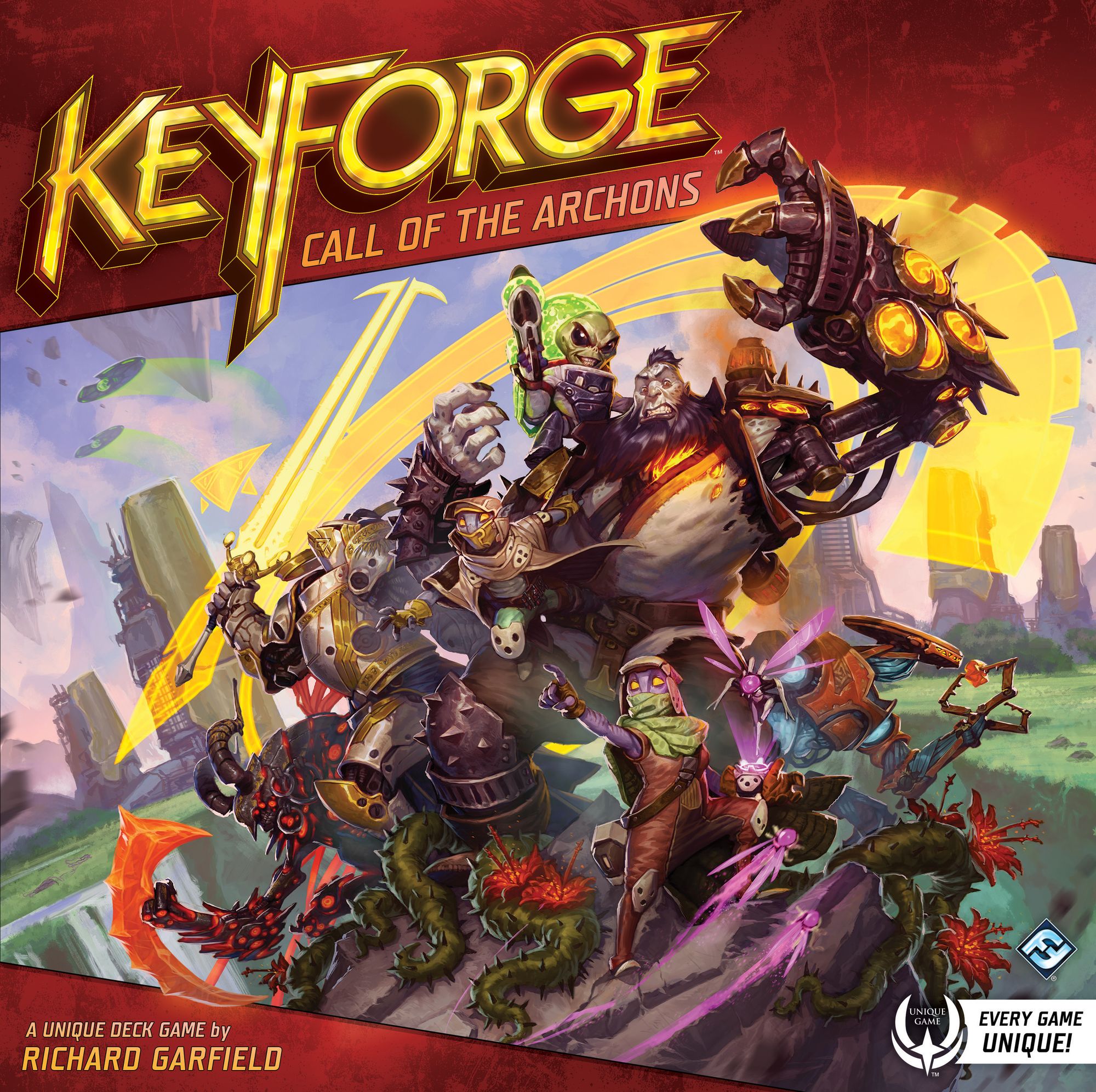
KeyForge: Call of the Archons
From the imagination of legendary game designer Richard Garfield comes a game unlike anything the world has ever seen—a game where every deck is as unique as the person who wields it and no two battles will ever be the same. This is KeyForge, where deckbuilding and boosters are a thing of the past, where you can carve a path of discovery with every deck, where you can throw yourself into the game with the force of a wild wormhole and embrace the thrill of a tactical battle where wits will win the day! Along with this new breed of game comes a new world: the Crucible, an artificial world built from the pieces of countless planets across the stars. Here, anything is possible. This world was built for the Archons, god-like beings who, for all their power, know little about their own origins. The Archons clash in constant struggles, leading motley companies of various factions as they seek to find and unlock the planet’s hidden Vaults to gain ultimate knowledge and power. This starter set contains two starter decks, two unique Archon Decks, and all the keys and tokens two players need to play! KeyForge: Call of the Archons is the world's first Unique Deck Game. Every single Archon Deck that you'll use to play is truly unique and one-of-a kind, with its own Archon and its own mixture of cards in the deck. If you pick up an Archon Deck, you know that you're the only person in existence with access to this exact deck and its distinct combination of cards. In fact, in just the first set of KeyForge: Call of the Archons, there are more than 104 quadrillion possible decks! Every Archon Deck contains a full play experience with a deck that cannot be altered, meaning it's ready to play right out of the box. Not only does this remove the need for deckbuilding or boosters, it also creates a new form of gameplay with innovative mechanics that challenges you to use every card in your deck to find the strongest and most cunning combinations. It is not the cards themselves that are powerful, but rather the interactions between them—interactions that can only be found in your deck. Your ability to make tough tactical decisions will determine your success as you and your opponent trade blows in clashes that can shift in an instant! KeyForge: Call of the Archons is played over a series of turns in which you, as the Archon leading your company, use the creatures, technology, artifacts, and skills of a chosen House to reap precious Æmber, hold off your enemy's forces, and forge enough keys to unlock the Crucible's Vaults. You begin your turn by declaring one of the three Houses within your deck, and for the remainder of the turn you may play and use cards only from that House. For example, if you take on the role of the Archon Radiant Argus the Supreme, you will find cards from Logos, Sanctum, and Untamed in your deck, but if you declare "Sanctum" at the start of your turn, you may use actions, artifacts, creatures, and upgrades only from Sanctum. Your allies from Logos and Untamed must wait. Next, you must strive to gain the advantage with a series of tactical decisions, leveraging both the cards in your hand and those in play to race ahead of your opponent. If you wish to weaken your rival’s forces, you may send out your allies to fight enemies on the opposing side, matching strength against strength. Otherwise, you may choose to use your followers to reap, adding more Æmber to your pool. Notably, no card in KeyForge has a cost — choosing a House at the start of a turn allows you to play and use any number of cards from that House for free, leading turns to fly by with a wave of activity! Yet balance is key. If you simply reap more Æmber at every opportunity, your rival may quickly grow their team of minions and destroy yours, outpacing your collection and leaving your field barren. But if you focus on the thrill of the fight alone and neglect the collection of Æmber, you won't move any closer to your goal! If you succeed in finding a harmony within your team and have six Æmber at the start of your turn, you'll forge a key and move one step closer to victory. The first to forge three keys wins! —description from the publisher
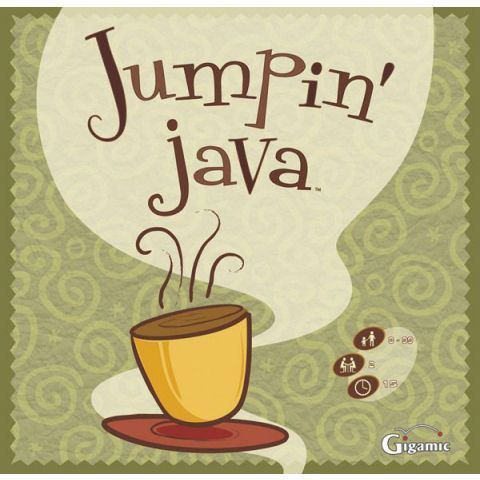
Jumpin' Java
From the box back: The strategy game that's a big buzz without the caffeine! Try to outwit your opponent and be the first player to jump your cups and slide your saucers to the opposite end of the game board. Jumpin' Java is a unique game that is fun to play and display. It is sure to find a home on your 'coffee' table. Beautiful wood game box holds 4 cups and 4 saucers with a unique, folding coaster game board and instructions.
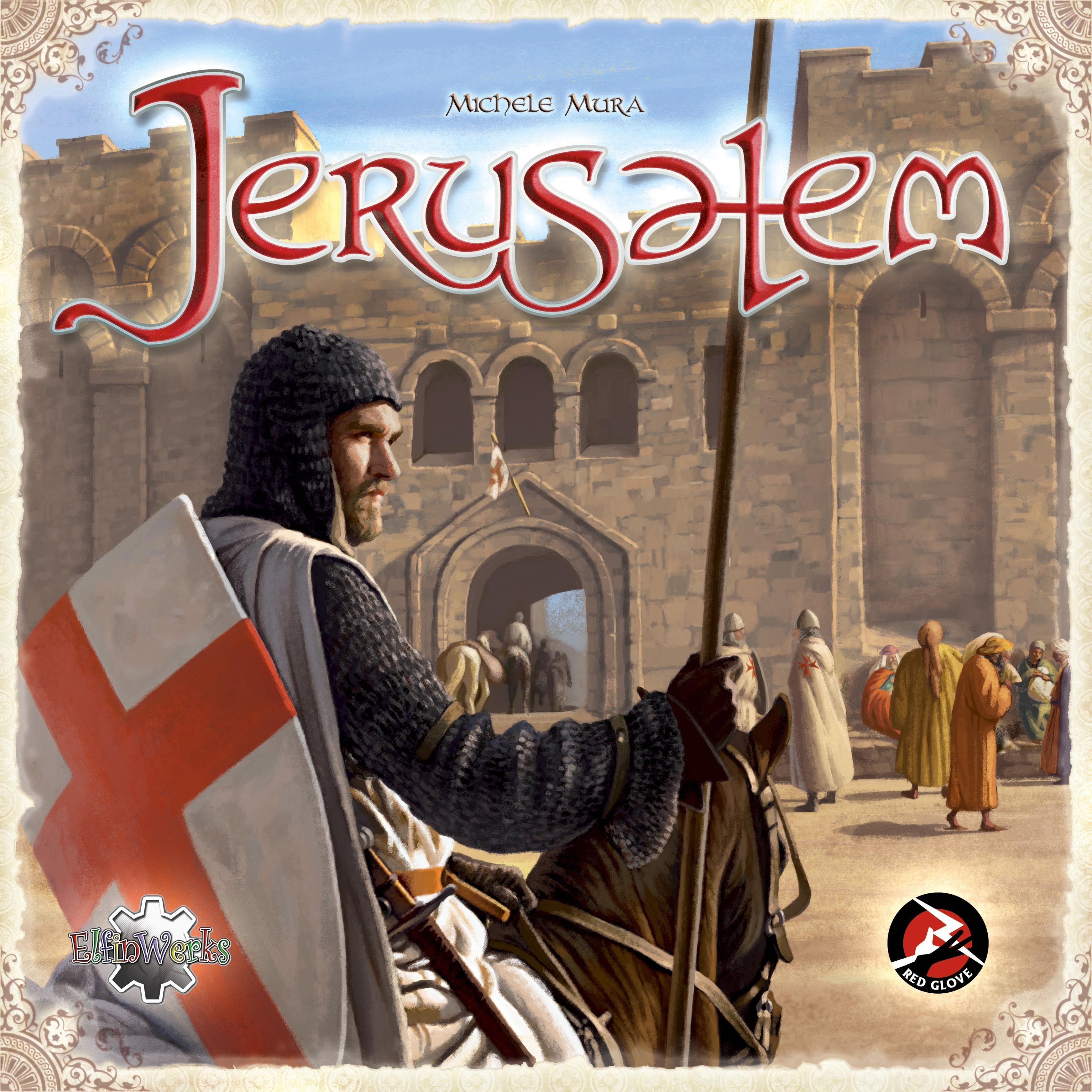
Jerusalem
Jerusalem in the 12th Century was a city embroiled in intrigues and power struggles. The Crusader Houses established themselves as the city's rulers, but who would rule over them? Now you must join in the power politics of the holy city, using your resources to control the most important districts and building a castle that towers over your opposition. Prove yourself the most capable Baron, and take your rightful place as the ruler of Jerusalem! OVERVIEW The goal for each player is to control the key Sectors of the city: the King, the Church, the Market, the Military, the Nobilty and the Tower of David. This control is achieved gaining the favors of the most important roles of the city (such as the Constable) and by placing Men and Barons into these Sectors. Who owns the most forces gets the Revenue of that area: Men, Gold and Tower-Points. The players can use these new resources to improve their position in the city. At the end of each round the players can rise their Towers building new floors. Also players will have to manage the Special Privileges and bad Events that will take place at end of each Round. At the end of the game, the player with the highest Tower will be the winner and his family will rule the city!
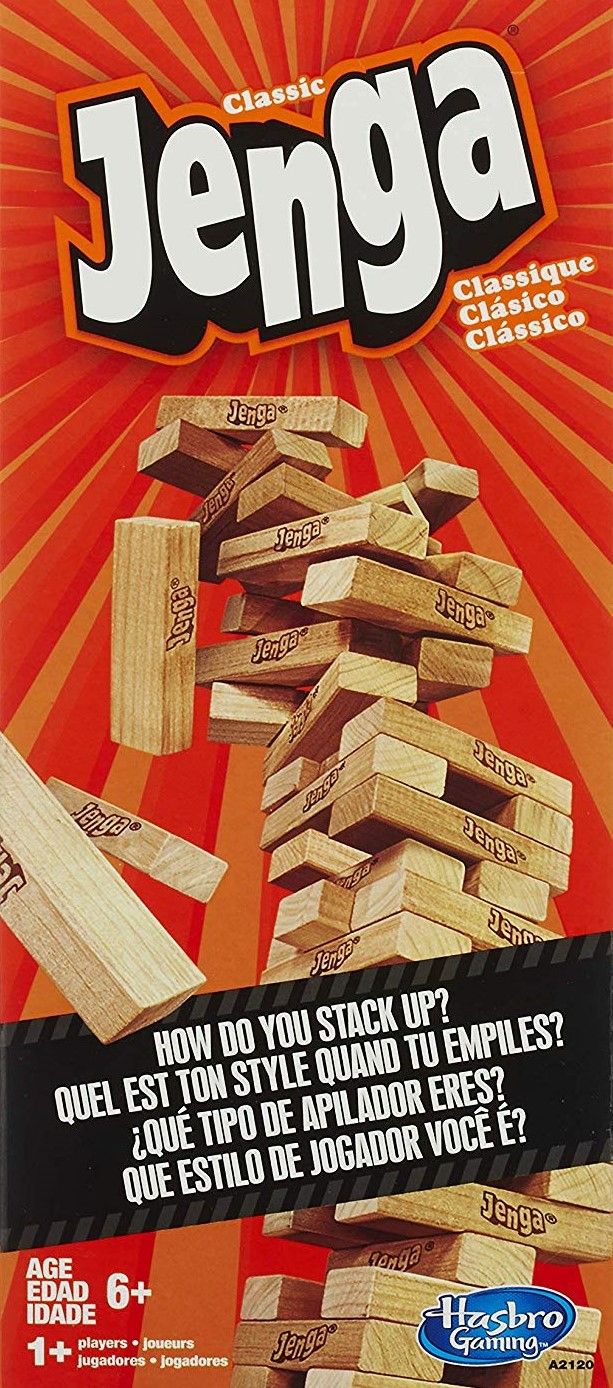
Jenga
Jenga is tower building game played with 54 wooden blocks; each block is 3 times as long as it is wide, and slightly smaller in height than in width. The blocks are stacked in a tower formation; each story is three blocks placed adjacent to each other along their long side, and each story is placed perpendicular to the previous (so, for example, if the blocks in the first story are pointing north-south, the second story blocks will point east-west). There are therefore 18 stories to the Jenga tower. Since stacking the blocks neatly can be tedious, a plastic loading tray is included. Once the tower is built, the person who built the tower moves first. Moving in Jenga consists of taking one and only one block from any story except the completed top story of the tower at the time of the turn, and placing it on the topmost story in order to complete it. Only one hand at a time may be used to remove a block; both hands can be used, but only one hand may be on the tower at a time. Blocks may be bumped to find a loose block that will not disturb the rest of the tower. Any block that is moved out of place may be left out of place if it is determined that it will knock the tower over if it is removed. The turn ends when the next person to move touches the tower, although he or she can wait 10 seconds before moving for the previous turn to end if they believe the tower will fall in that time. The game ends when the tower falls in any significant way -- in other words, any piece falls from the tower, other than the piece being knocked out to move to the top. The loser is the person who made the tower fall (i.e. whose turn it was when the tower fell); the winner is the person who moved before the loser. The same game concept was published in 1984 by Fagus under the name "Hoppla - eins zuviel!" According to the designer, the game was developed from Takoradi blocks/bricks. "Jenga" is Swahili for "build".
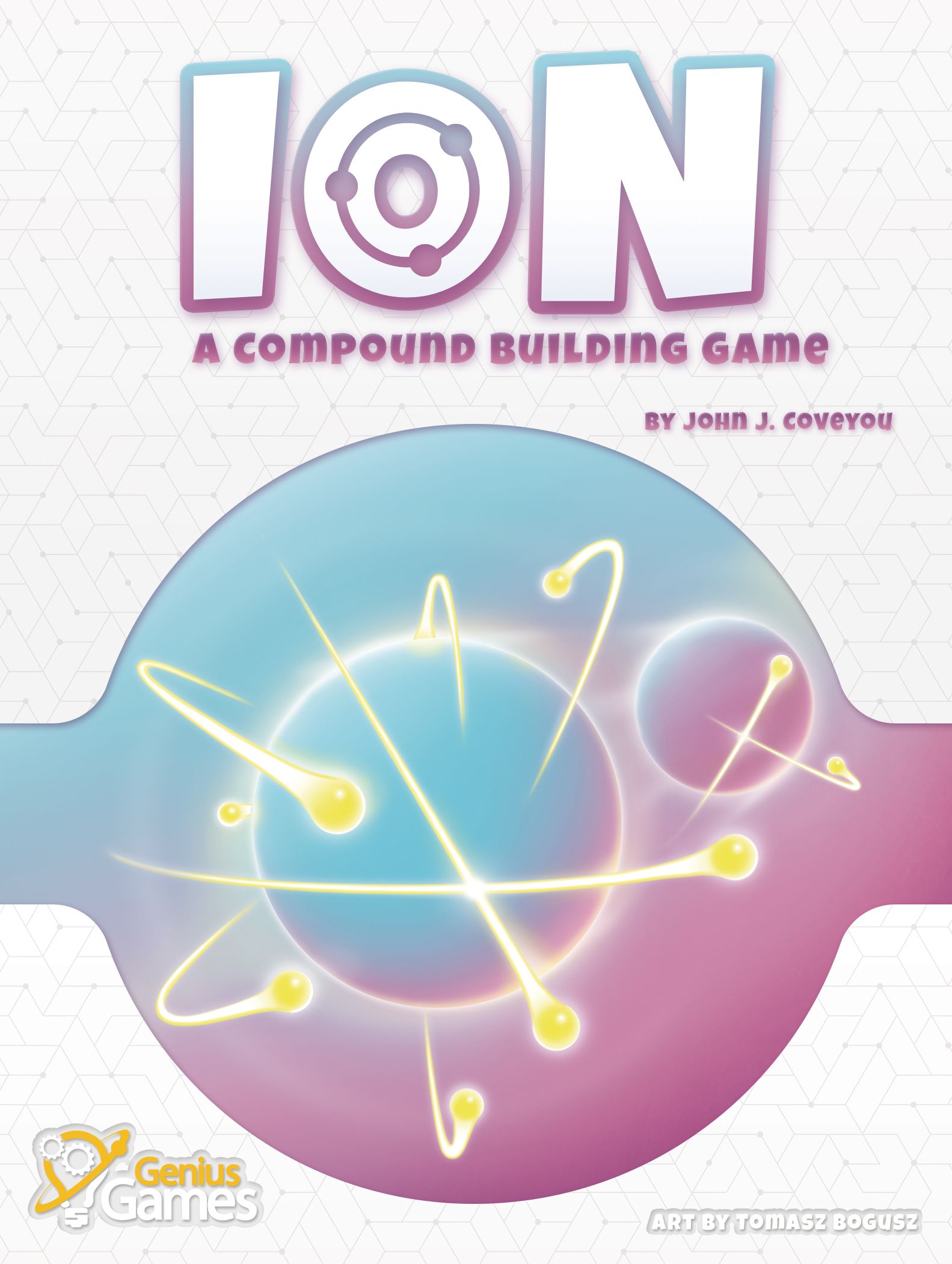
Ion: A Compound Building Game
ION: A Compound Building Game is a card drafting game where players select from a number of available Ion Cards and Noble Gas cards with the goal of creating sets of compounds and inert noble gases. Here’s how the game is played: Each player is dealt eight cards, must select one of those cards and then passes the remaining. Players must choose to either bond (pair) their selected card with another Element Card or set it alone (possibly to form an ionic bond at a later time). Throughout the game, players gain additional points for building specific compounds which are listed on the Compound Goal Cards and have available a set of Action Tiles which award them additional moves throughout the game. Players score points based upon the quantity and type of neutrally balanced compounds they construct and noble gas sets they collect. After three rounds, players add their total scores from each round, subtract points from Action Tiles used, and the player with the most points wins!
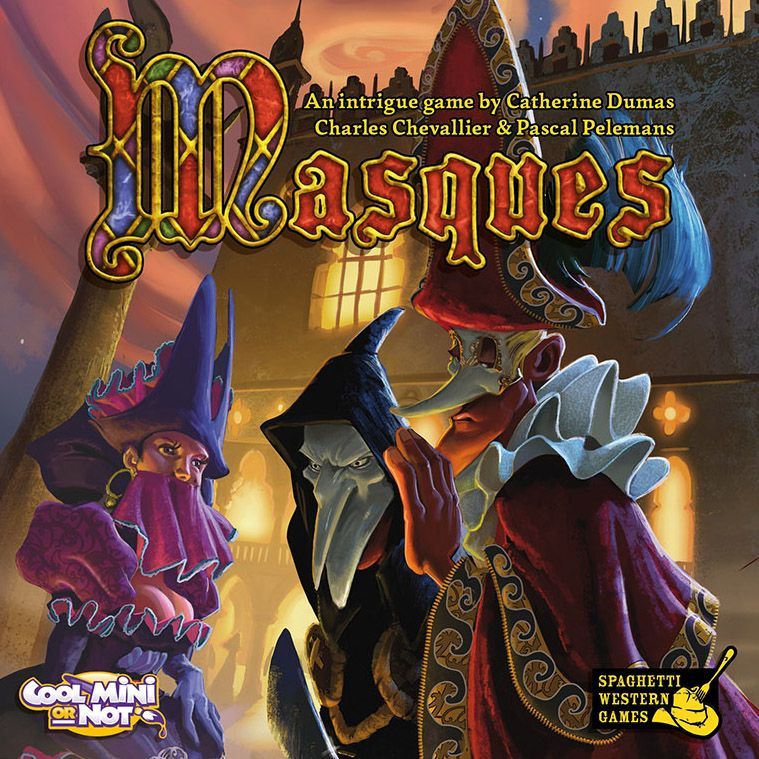
Intrigo a Venezia
As the head of an ambitious Venetian family in Intrigo (a.k.a. Masques) – which won the 2009 Concours de créateurs under the title St Benoît – you have sent your most influential representatives to mingle at the Doge's masquerade ball. By cleverly positioning these guests (and by manipulating the guests of your opponents), you'll vie for the attention of Venice's elite guild masters, ensuring the most political power for your family. Gameplay revolves chiefly around the clever use of guest cards with varying levels of influence. Each player receives a hand of guest cards, and each guest card has an influence value and its own power, e.g., the peddler, the assasin and the gondolier. The higher the influence, the greater that guest's clout at court. Each player's hand consists of a mix of cards representing members of any of the families currently in play. Use a rival family's guest cards against them, and watch for chances to set up your own house for success. Each of the rooms of the Doge's palace offer tokens representing a guild's favor or valuable ducats to be won by ambitious nobles. The spaces between each card that represents a room in the palace are the hallways of the Doge's estate – the areas in which guest cards are placed to compete for adjacent resources.
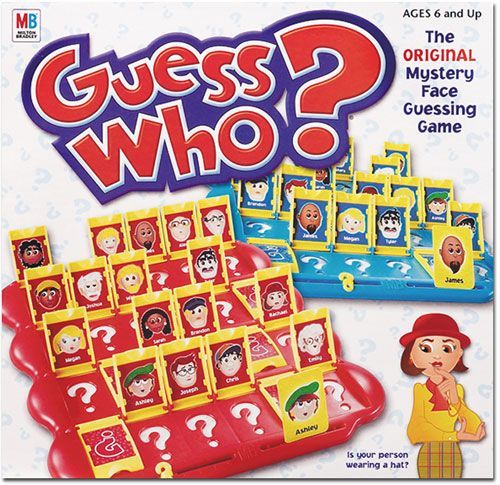
Indovina chi?
The mystery face game where you flip over a collection of faces with different color hair, eye color, hair, hats, glasses etc. to deduce who the secret person is that your opponent has chosen. You flip over the hooked tiles as you narrow your choices by asking characteristic questions.
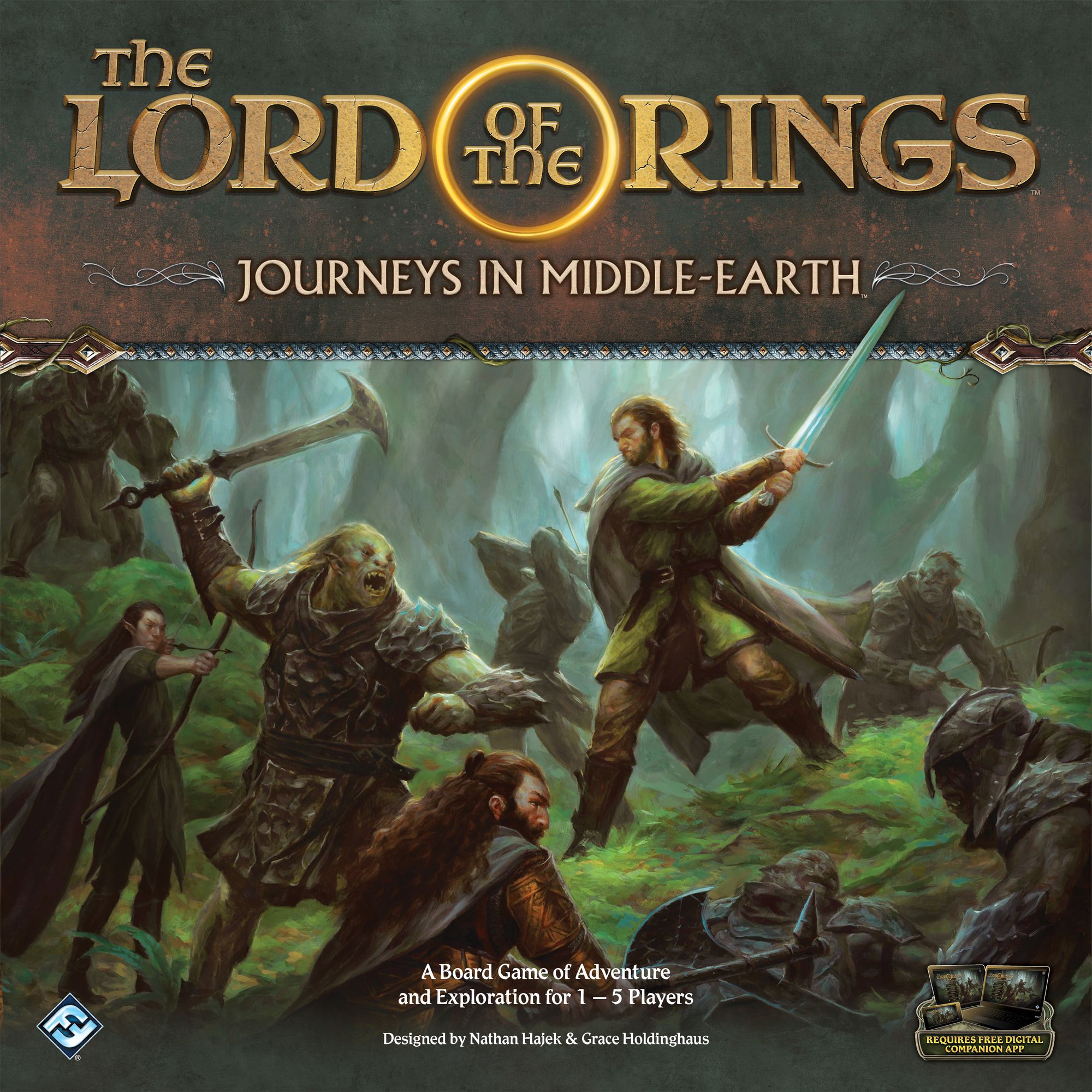
Il Signore degli Anelli: Viaggi nella Terra di Mezzo
Embark on your own adventures in J.R.R. Tolkien's iconic world with The Lord of the Rings: Journeys in Middle-Earth, a fully co-operative, app-supported board game for one to five players! You'll battle villainous foes, make courageous choices, and strike a blow against the evil that threatens the land — all as part of a thrilling campaign that leads you across the storied hills and dales of Middle-Earth. Each individual game of Journeys in Middle-Earth is a single adventure in a larger campaign. You'll explore the vast and dynamic landscapes of Middle-earth, using your skills to survive the challenges that you encounter on these perilous quests. As you and your fellow heroes explore the wilderness and battle the dark forces arrayed against you, the game's companion app guides you to reveal the looming forests, quiet clearings, and ancient halls of Middle-Earth, while also controlling the enemies you encounter. Whether you're venturing into the wild on your own or with close companions by your side, you can write your own legend in the history of Middle-Earth. —description from the publisher
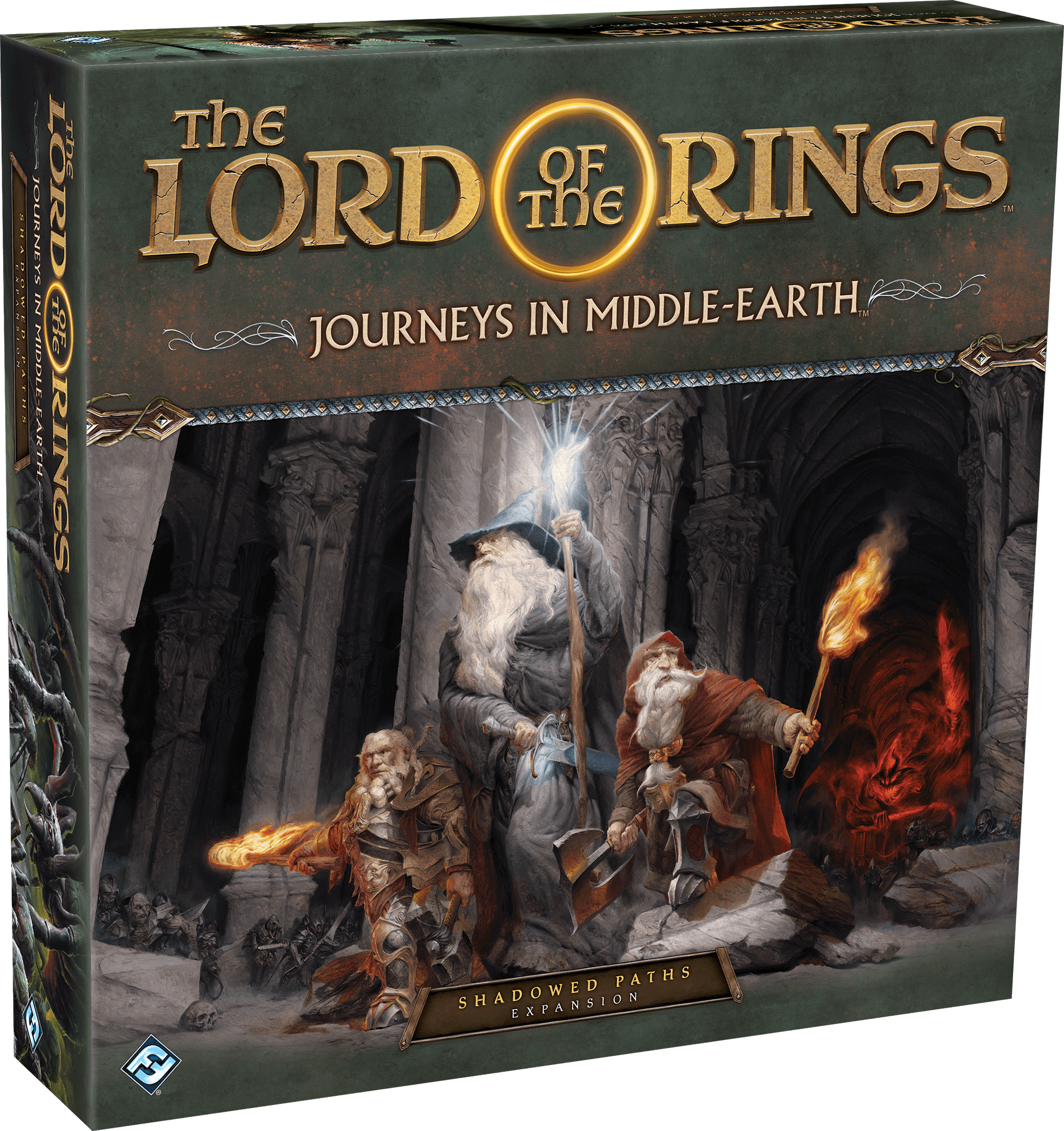
The Lord of the Rings: Journeys in Middle-earth – Shadowed Paths Expansion
Expand your adventures across Middle-earth with the Shadowed Paths expansion for The Lord of the Rings: Journeys in Middle-earth! This expansion adds new heroes, enemies, terrain, and items to all of your adventures, unlocking more ways for you to explore this iconic land. Meanwhile, an all-new campaign containing thirteen scenarios invites you to walk the tangled paths of Mirkwood and venture into the shadowed halls of abandoned Moria to face ancient evils. Will you heed the call? Prepare your heroes and brave the terrors of Shadowed Paths! —description from the publisher
Il Signore Degli Anelli
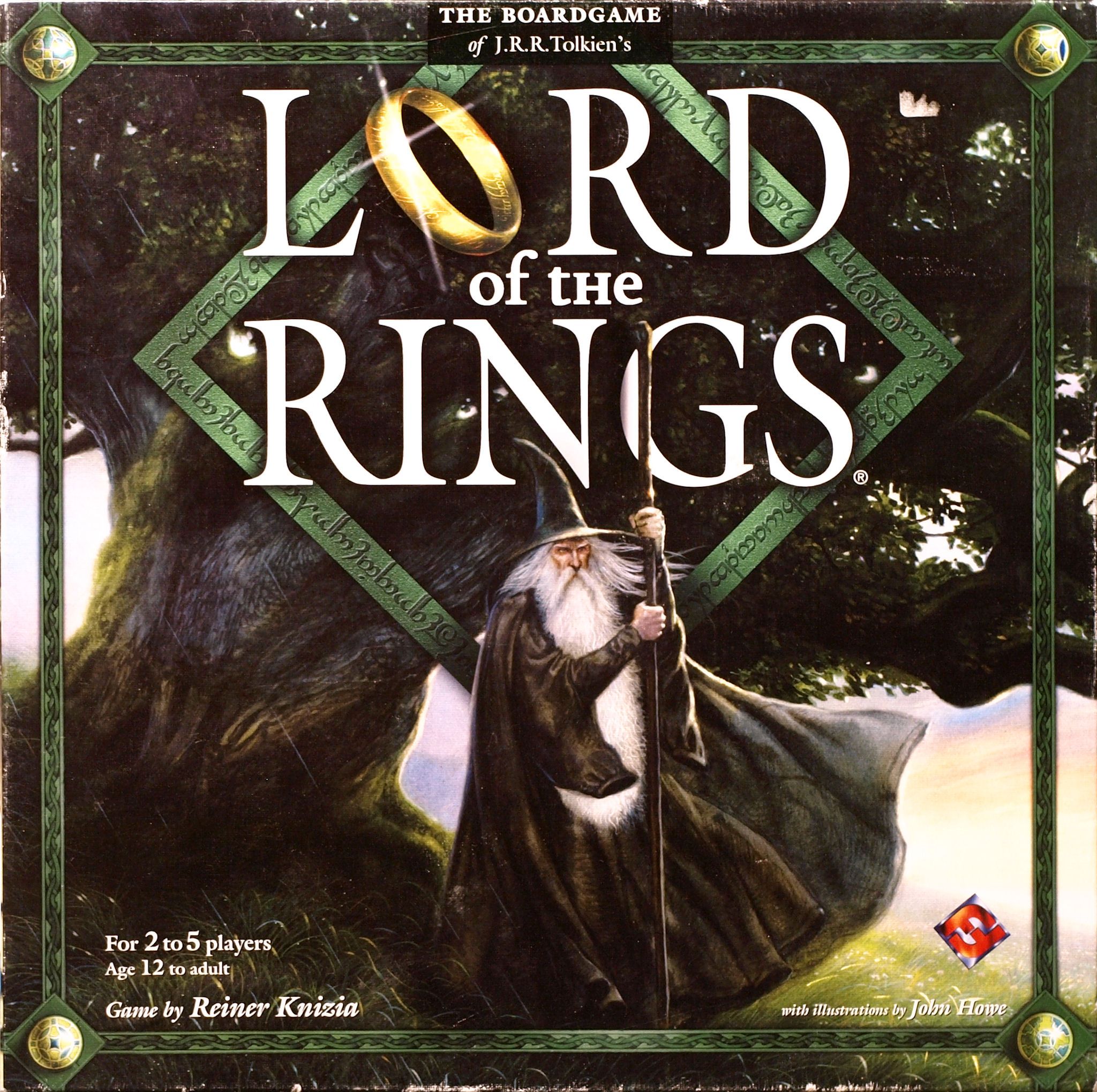
The Lord of the Rings is a co-operative game in which the object is to destroy the Ring while surviving the corrupting influence of Sauron. Each player plays one of the Hobbits in the fellowship, each of which has a unique power. Over the course of the game, you make your way across four conflict game boards, representing some of the most memorable conflicts from the entire trilogy: Moria, Helm's Deep, Shelob's Lair, and Mordor. Each conflict board tests your small Fellowship to the utmost as you must play your quest cards to advance along multiple tracks. These tracks represent fighting, hiding, traveling, and friendship, and by playing quest cards from your hand with matching symbols, you can keep moving forward and push closer to victory. The master game board indicates both the physical progress of the fellowship across Middle Earth and the corrupting influence of Sauron on the hobbits. If you're able to slip past your foes, you can hope to escape with minimal corruption, healing your hurts at safe havens along your path, such as the forest kingdom of Lothlórien. By playing your cards right and advancing quickly, you can collect powerful runes, unlock legendary cards to aid your journey, or find life tokens to help stave off corruption — not to mention advancing quickly through the conflicts. As you travel, the One Ring can be a crucial tool in your journey, allowing you to hide from sight, but repeated use will draw the attention of Sauron and corrupt the heart of the Ring-bearer. Your journey leads you deeper into the darkness with each passing conflict, and safe havens become few and far between. You must carefully watch the corruption track because if the Sauron miniature ever meets a Hobbit, that player is eliminated — and if the Ring-bearer is eliminated, all players lose as Sauron reclaims the power of the One Ring. To win, throw the One Ring into the volcanic fires of Mount Doom. This game should not be confused with Reiner Knizia's children's game (Lord of the Rings) with the same title, or with his very different two-player Lord of the Rings: The Confrontation. Lord of the Rings - Limited Edition A special edition limited to 500 copies in the English language and 250 in German published by Sophisticated Games and Kosmos in November 2001. The Limited Edition has a silver 22 carat gold plated ring, pewter Hobbit playing pieces, and a signed and numbered John Howe print. Box signed by Reiner Knizia.
Il Regno Delle Sabbie
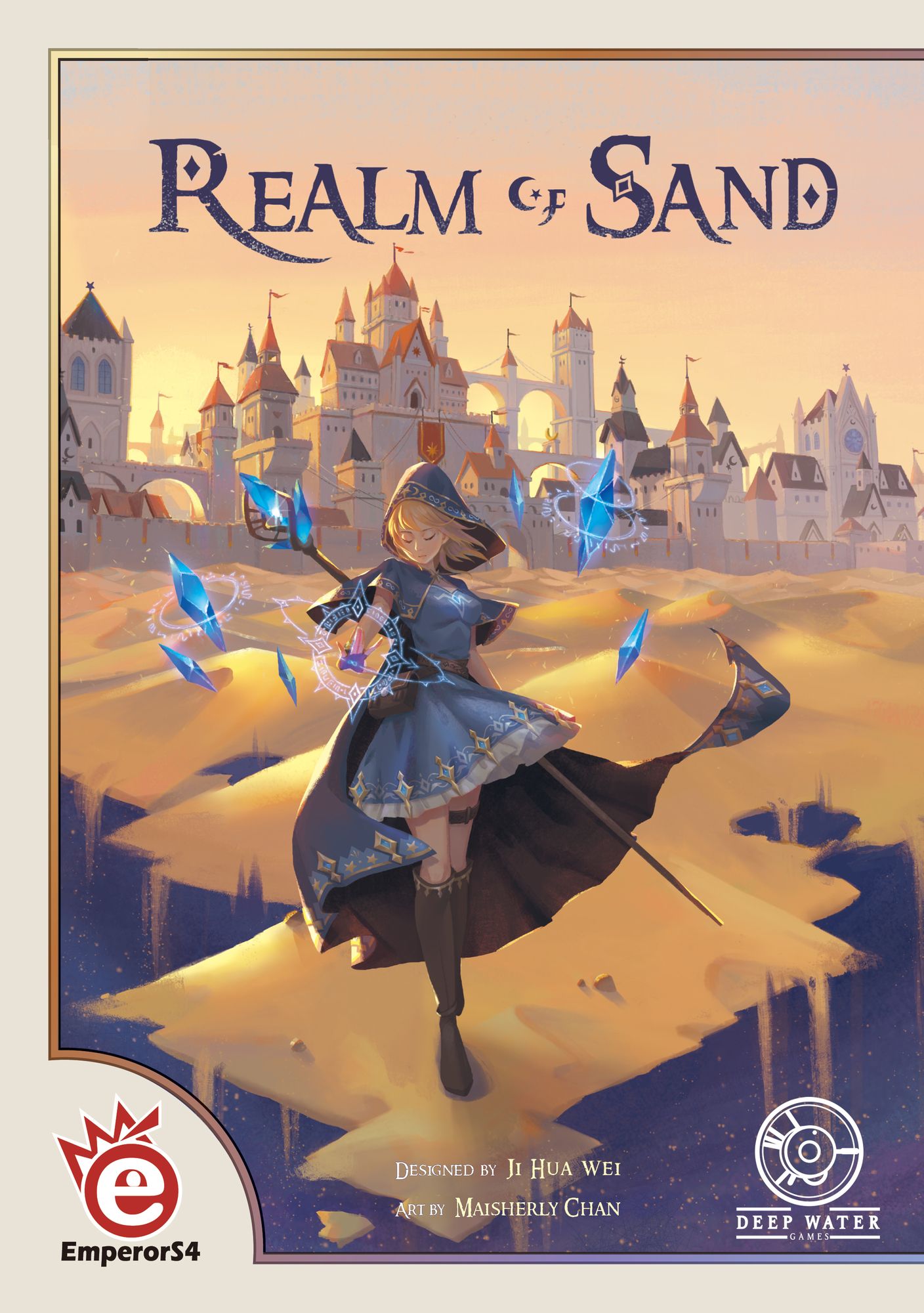
The Realm of Sand, the mirror of the material world and the source of magic in Ragusa, has started dying. After thousands of years of overuse, the magic has begun to dissipate. With the realm in peril, time bends and reality shifts uncontrollably in the physical world. The Queen of Ragusa has embarked on a journey to the Realm of Sand to save her home. While she travels the plane awaking the power of the glyphs, you as a royal magician must act quickly to assemble those glyphs and stabilize the magic to reconstruct the realm of sands. Who will help the queen save Ragusa and become hero of the Realm of Sand?
Il Mistero dei Templari
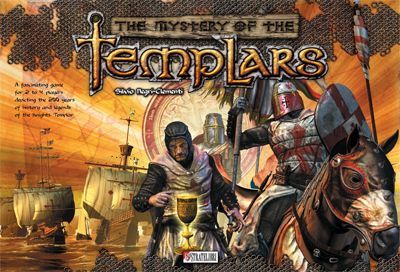
For 200 years, the Knights Templar were a powerful political and economic force, helping to shape Europe during the Middle Ages. Founded to protect pilgrims on their journeys to the Holy Land, the "poor comrades-in-arms of Christ and the Temple of Solomon" would eventually grow a network of strongholds ("Commanderies") throughout the Christian world, where novice knights were trained, and trade goods could be managed and exchanged. By 1307, the “poor comrades-in-arms” were one of the richest organizations in Europe: one that would attract the covetous eyes of the French king. In The Mystery of the Templars, players become the masters of this secretive organization. They must assign their knights to the critical task of escorting pilgrims, but also to seek out and discover long-lost artifacts of Christian lore. Using their holdings in the Holy Land, they procure valuable trade goods, which must then be transported to the hungry markets of Europe, using the profits to expand the Order’s holdings. But along the way brigands and pirates threaten the flow of goods and wealth, and must be challenged by valorous knights to safeguard the precious caravans and trade ships. To be successful, the players must balance the needs of trade, development, and battle. In time, the powerful enemies of the Templars will strike, beginning the Persecution which will eventually cause the destruction of the Order. In those last desperate days, the players must flee from their Commanderies with all the wealth and relics they can carry, seeking refuge in the farthest corners of the world. The player who can best manage the resources of the Order during the days of wealth, and who can rescue the most important relics from the Persecution, will be the victor in The Mystery of the Templars.
Il Gioco dell'Oca
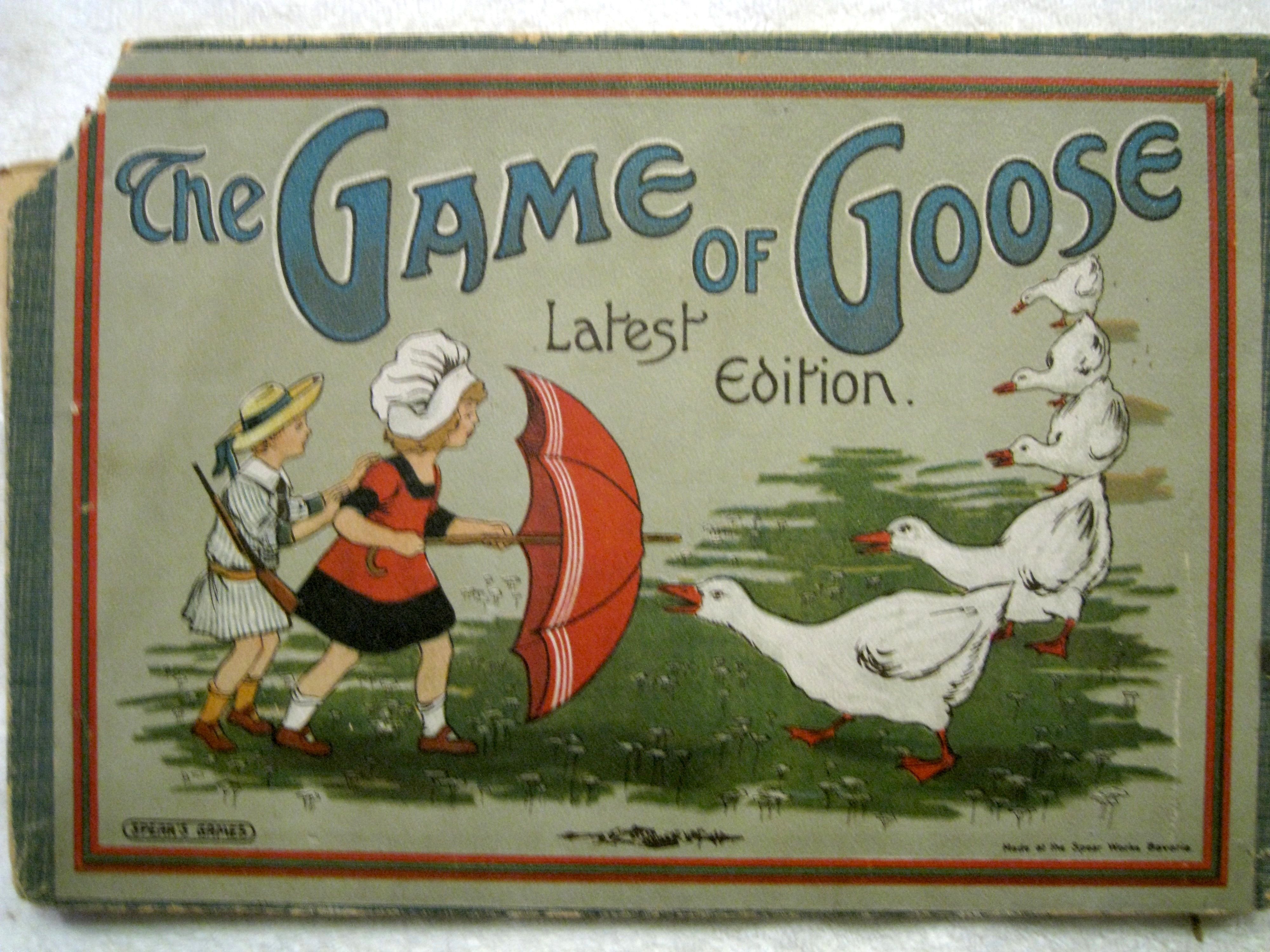
The Game of Goose is an ancient children's classic, possibly tracing its roots all the way to the Ancient Egyptian game of Mehen which was played in early Old Kingdom times. Francesco de Medici in Italy sent a copy of this game to King Felipe II of Spain during the 16th century. It became one of the most popular games in Europe during that time. Circa 1600, Benoît Rigaud's heirs printed in Lyon "Le Jeu de l'oye, renouvellé des Grecs, jeu de grand plaisir, comme aujourd'huy princes & grands seigneur" [sic] "le pratiquent" - Le jeu de l'oie, renewed from the Greeks, game of great pleasure, as today princes and great lord [sic] play it -, the oldest French copy known. Father Claude-François Menestrier describes the game in his "Bibliothèque curieuse et instructive" (1704) : 'There's another type of game, that seems easier to learn, and easier to play; it's the game of goose so common and it is said to come from the Greeks, though nothing can be found about it in their authors. This game is much easier than cards game, because it's always wholly displayed to the players, and, being in the form of a snail or spirally folded snake, it's appropriate to print the things that one wants to learn...'. The game became an instant hit in France in the 1600s, and engendered a lot of variants (educational, commemorative, ...) up to the present day. It turned up later in England about 1750, according to Whitehouse, under the title "Royall & most pleasant game of the goose - Invented at the Consistory in Rome and are printed and sold by H. OVERTON at Ye White Horse without Newgate where all sorts of Fine Prints and maps are Sold and Framed at Reasonable Rate". By 1851 it had been copied by the American publisher J.P. Beach of New York who entitled it The Jolly Game of Goose. An 1855 edition was called simply The Game of Goose. It is a simple game of racing, using a spiral track with lovely illustrations. The main principle is one shared with Snakes and Ladders as well as the later Game of Life: virtue is rewarded and vice is punished. Schmidt Spiele rates their Gänsespiel for ages 5 and up. Bibliography Whitehouse, F. R. B. (1971) [1951]. Table games of Georgian and Victorian days. Birmingham: Priory Press Ltd. 'Jeux de princes, jeux de vilains', edited by Eve Netchine, Bibliothèque nationale de France / Seuil (2009). --gameplay description from Wikipedia: The board consists of a track with consecutively numbered spaces (usually 63), and is often arranged in a spiral with the starting point at the outside. Each player's piece is moved according to throws of one or two dice. Scattered throughout the board are a number of spaces on which a goose is depicted; landing on a goose allows the player to move again by the same distance. Additional shortcuts, such as spaces marked with a bridge, move the player to some other specified position. There are also a few penalty spaces which force the player to move backwards or lose one or more turns, the most recognizable being the one marked with a skull and symbolizing death; landing on this space results in the player being sent back to start. On Spanish boards the reverse is usually a Pachisi board. Many themed versions of the game have been created, depicting topics as diverse as ice skating, Richard Nixon, and sewage pumps. These can be valued for their historical or artistic merits even by those who have no interest in the game itself, with some editions having been sold for thousands of dollars at auction or displayed in museums.

Ice Team
Ice Team is a two-player racing game in which you have to bring your polar bears as quickly as possible to the finish line, having collected as many fish as possible from the igloos. Each turn, a player moves one of their four bears in any directions over round ice tiles with either an ice floe, an igloo (hiding some fish), or a malus (like seal, withdrawing some fish). After an ice floe is visited, the tile is removed from the table, thereby creating a gap that bears can't use on future turns. The player who manages to reach the finish line with the most fish wins.
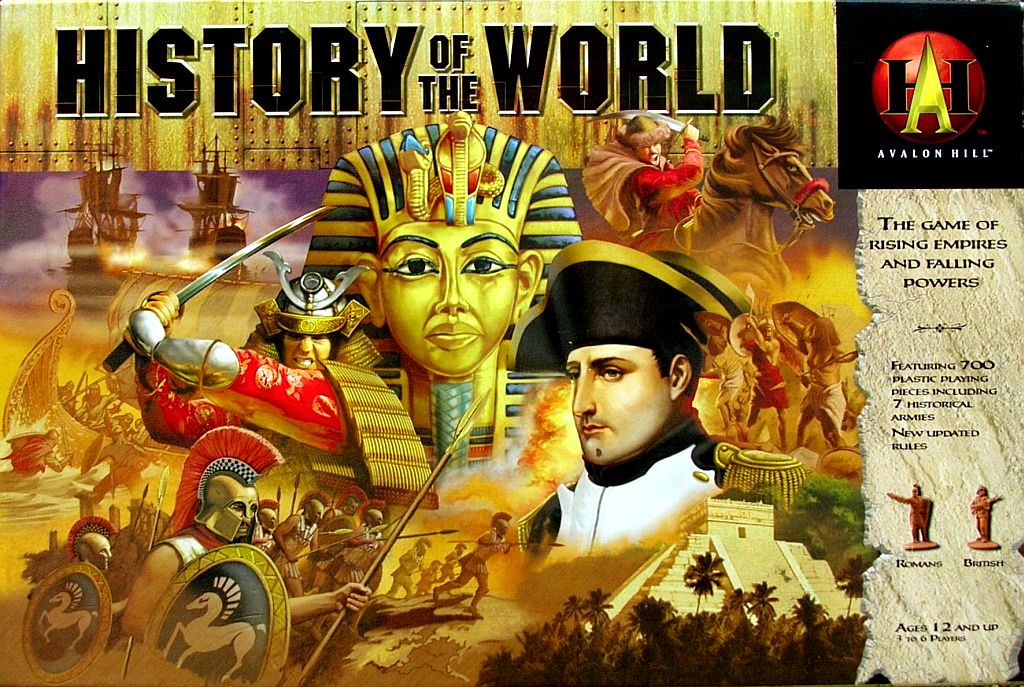
History of the World
History of the World works under the assumptions that all empires eventually fade and that the only things differentiating great empires from lesser ones is how much territory they conquer and how long it takes for their civilizations to disappear. The game is played out over 7 epochs or rounds, from the ancient 3000 B.C. Sumerians to the pre-WW1 Germany, with every player controlling a new rising empire from history. Some empires are stronger than others (like the Romans), but the game's clever mechanisms can help balance that out. At the end of each epoch, players score points for all units of their color (from both the current and any previous empires) remaining on the board. Before the start of their turn a player may play up to two Event cards from their hand. The Events played are resolved before the player starts his Empire's actions. If the player's active Empire has navigation a ship token is placed in each sea or ocean listed (if an ocean is listed all adjacent seas to the ocean have ship markers put into them). A Reallocation Greater Event allows an Empire with Navigation to exchange Fleets in seas and oceans for Coins that can be used to buy back defeated troops (1 coin per troop). If the active Empire has a capitol it is taken and placed in the Empire's starting land with one unit of the Empire's available troops. Since each land space may only contain one troop the player begins expanding from their starting land by placing troops in any adjacent land space that they wish to occupy or conquer. To conquer a land the attacker moves one unit into the land space either from adjacent land or through a sea with a ship in it. Then dice are rolled, the attacker gets 2 dice and the defender only one, unless the attacker traveled across a strait or the defender's land has either a forest, the great wall of China, or mountains on the border of the land that the attacker came from. In this case the defender receives 2 dice as well. If the attack comes from the sea the defender gets 3 dice for defense. Highest score wins with ties killing off both the defender and attacker. In this case the attacker can merely place the next troop, if he has any left, in the now-empty land space. At any time the active Empire player may exchange an unplaced troop for a fort. On later turns, a fort gives the player a +1 to defensive rolls in that land. Also, if the defender in a fort loses or ties with an attacker only the fort is removed and the battle continues. Whenever an army conquers a land with a capitol the capitol mini is flipped reducing it to a city (if it was a city to begin with it is removed from board when conquered). After the active player's Empire is finished with it's actions check to see if it conquered to land spaces with resource symbols, if so it can build a monument. Then scoring takes place. Each area (Middle-East, Northern Europe, Eurasia, etc...) has a tile with 3 values for the current Epoch. One value is for having a presence in the area (at least one land). Another value is for having Dominance in the area (at least 2 lands and more than any other player in area). The last value is for having Control of an area (at least 3 lands and no other player has any in area). These values vary from Epoch to Epoch and Area to Area (Middle-East is more valuable in early Epochs and fades in later Epochs, for example). Total the scores from each area for all pieces of the player's color from all Empires controlled that remain on board. Then add 2 points for each capitol controlled, 1 point per city and one point for each monument controlled. After all areas are scored the next Empire called takes its turn. After all players have taken their turns and scored, for the first Epoch, the player with the highest score gets to take a pre-eminence marker and places it in front of him. These are secret bonus points (worth somewhere from 3 to 6) for the end of the game and may not be examined till then. This bonus to leader helps balance the Empire-draw mechanic and makes it valuable to score maximal points even early in the game, rather than tanking to get a better draw later. Then drawing begins for the next Epoch with the player having the lowest score drawing first on up to the person with the highest score drawing last (and likely being given a less than optimal Empire by another player). After the last player has scored for Epoch 7 and the leader has drawn a pre-eminence marker, all players reveal their pre-eminence markers and add them to their scores. The player with the highest score wins.
Puoi tenere Time For Boardgames sulla schermata Home senza scaricare niente.
In Safari tocca Condividi e poi Aggiungi a Home. La prima volta potrebbe chiederti di rientrare con il tuo account.
Un tocco e l'icona è sulla Home: nessuno store, nessuno spazio da liberare. Dal menu ⋮ di Chrome scegli Aggiungi a schermata Home.
Dal menu del browser scegli Aggiungi a schermata Home.